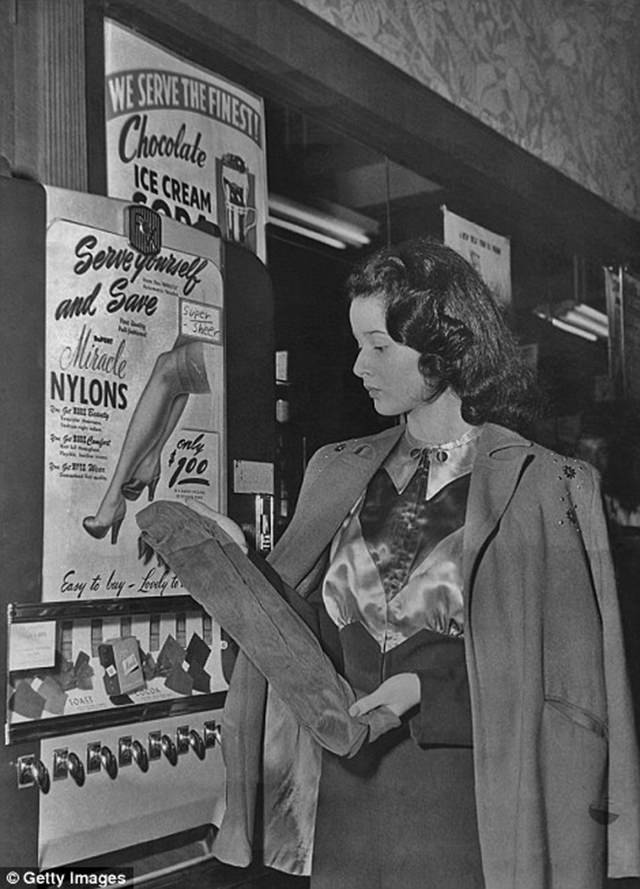
A storefront vending machine promises “Miracle Nylons” with the kind of bold, optimistic advertising that defined mid-century shopping culture. The woman standing beside it studies the purchase in her hands, her tailored coat and polished hairstyle echoing the era’s everyday glamour. Behind her, shop signs for treats like chocolate and ice cream hint at a busy retail strip where errands, indulgences, and modern conveniences mixed on the same sidewalk.
What makes the scene especially compelling is the idea of hosiery—an intimate, fashion-forward necessity—dispensed like a snack or a pack of cigarettes. The machine’s message to “serve yourself and save” speaks to a growing faith in automation, speed, and self-service, when new devices were reshaping how people bought even the smallest essentials. Nylon stockings themselves carried strong cultural weight in the postwar years, symbolizing both technological innovation and the return of consumer abundance.
As a historical photo, it offers a vivid snapshot of 1950s life: practical, aspirational, and increasingly mediated by machines. For readers interested in inventions, retail history, and vintage fashion, this moment captures the early roots of today’s automated shopping—where convenience is a selling point and the promise of modernity is printed right on the cabinet door. The quiet pause of inspection amid a bustling commercial setting reminds us that even in an age of gadgets, personal choice still mattered.