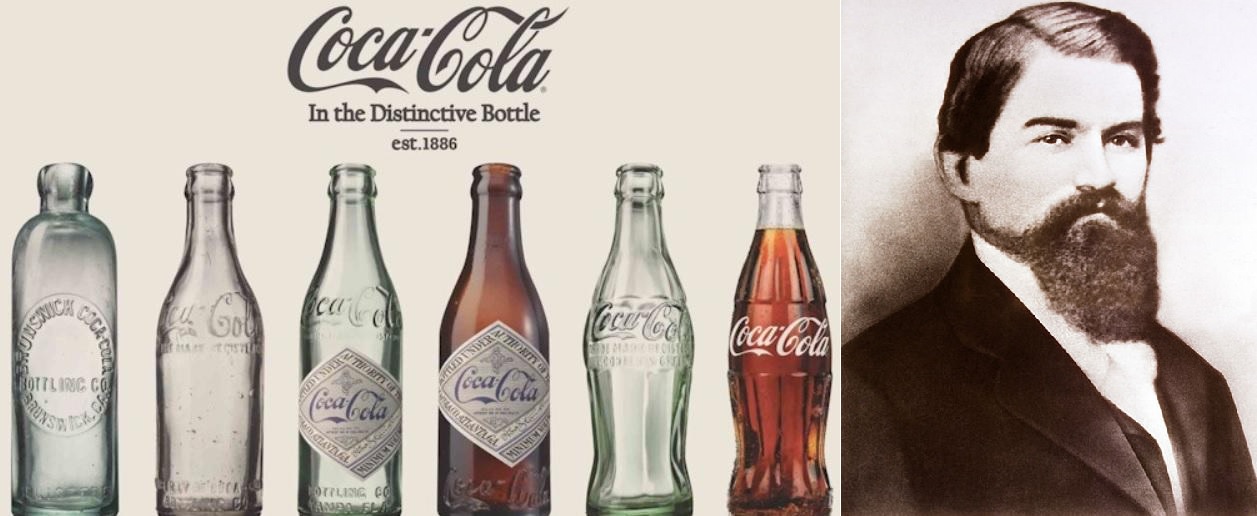
Across the top, the familiar Coca‑Cola script sits above a lineup of bottles that reads like a timeline of design—clear glass shifting to darker tones, labels changing shape, and silhouettes tightening into a more recognizable form. The words “In the Distinctive Bottle” and “est. 1886” frame the scene as both advertisement and origin story, reminding viewers how early branding leaned on typography, packaging, and repetition long before modern media saturation.
To the right, a formal studio portrait of a bearded man in a dark suit anchors the post’s title, “Coca-Cola (1886) by John Stith Pemberton,” linking invention to an inventor’s public image. The contrast between the calm, composed figure and the commercial parade of bottles underscores a key theme in the history of inventions: ideas rarely travel alone—presentation, trust, and identity help carry them into everyday life.
Seen together, these elements offer a compact lesson in business history and marketing evolution, where a patent-medicine era sensibility begins to transform into mass-market consumer culture. Readers searching for “Coca‑Cola 1886,” “John Stith Pemberton,” or the early history of the Coca‑Cola bottle will find in this photo a visual starting point for tracing how a single formula became a global icon through design, advertising, and the power of a consistent name.