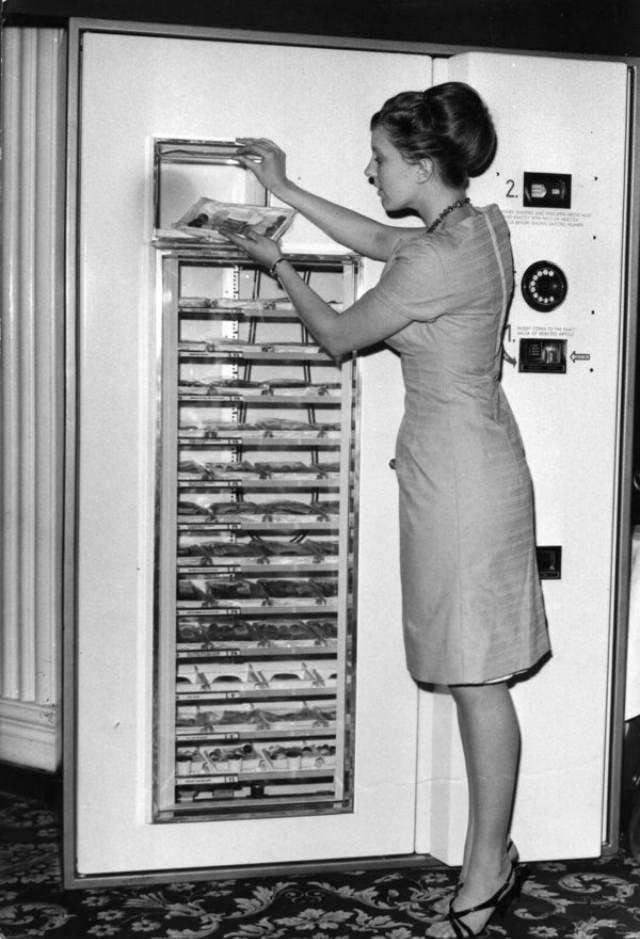
Sleek and imposing, the “5 Star Microdine Hot Meal Service” reads like a promise from the age of push-button convenience, when automation was beginning to creep into everyday eating. A woman stands beside the open front of the refrigerated vending machine, sliding a packaged meal into one of many neatly stacked compartments. The scene highlights a transitional moment in food history: meals prepared in advance, stored cold, and dispensed with the tidy efficiency usually reserved for cigarettes or candy.
Behind the open door, the machine’s interior reveals an orderly grid of metal shelves, each slot holding a wrapped portion ready for selection. On the right, a control panel with dials and coin-operated hardware suggests a self-service system designed for cafeterias, workplaces, or public venues where speed mattered. Even without knowing the exact setting, the photo communicates the sales pitch clearly—consistent portions, controlled temperature, and a “hot meal” experience engineered to be as simple as making a choice.
For collectors of invention ephemera and fans of retro food technology, this historical image captures the early logic of today’s on-demand dining culture. The 5 Star Microdine concept blends refrigeration, vending, and standardized packaging into a single cabinet, foreshadowing modern prepared-meal kiosks and office micro-markets. It’s a reminder that the quest for quick, reliable meals didn’t begin with apps—it started with machines built to turn convenience into a daily routine.