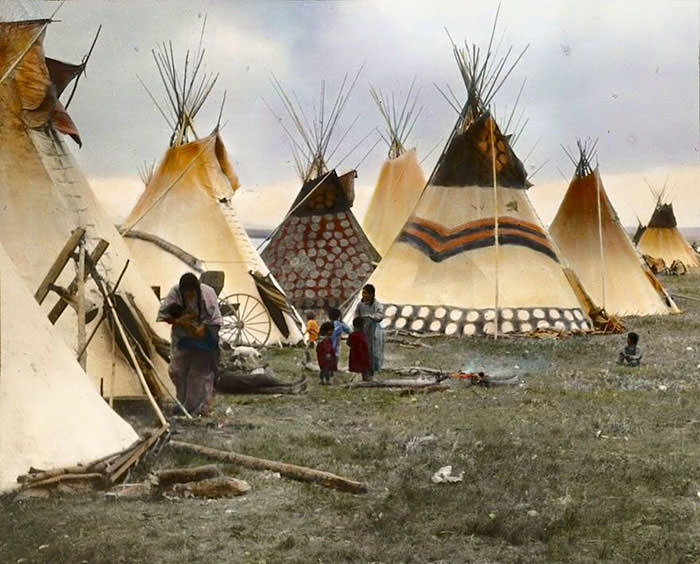
Across an open Montana prairie, a cluster of Blackfeet tipis rises in a lively rhythm of poles and canvas, each lodge marked by distinctive painted designs. Bands of color, rows of dots, and geometric patterns wrap the hides like signatures, turning a camp into a gallery of personal and communal meaning. The colorization draws the eye to those symbols and to the way the lodges sit together, suggesting a community organized with care rather than randomness.
Near the foreground, small figures move between the shelters while a larger adult form stands closer to the camera, grounding the scene in everyday life instead of ceremony alone. A wagon wheel and scattered camp items hint at travel, trade, and the practical work that sustained families on the move. The quiet spacing between tipis, the worn grass underfoot, and the soft sky overhead all contribute to a sense of lived-in continuity on the Northern Plains.
Titled “Painted Tipis Of The Headmen,” this early-1900s view attributed to Walter McClintock invites readers to consider how leadership and identity could be expressed through art on a home itself. Painted lodges carried stories, honors, and spiritual references, and their visibility within a camp made them part of public memory. For anyone searching Blackfeet history, Montana Native American photography, or Plains Indian tipi art, this post offers a vivid doorway into the aesthetics and daily presence of a Blackfeet encampment.