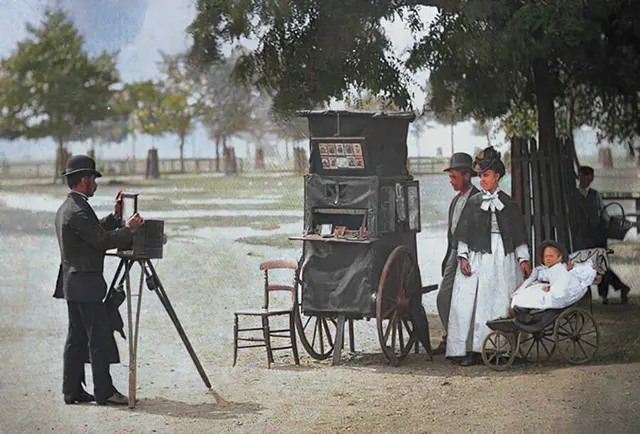
Under the shade of trees at Clapham Common, a street photographer steadies his camera on a tripod and prepares to make a portrait that feels both planned and spontaneous. The scene is presented in colorization, softening the distance between the 1890s and the present and letting small details—dark coats, pale fabrics, and the muted greens of the common—read with new immediacy. In the background, the open parkland and railings suggest a well-used public space where Londoners could pause, stroll, and be seen.
To one side sits the photographer’s wheeled setup, a compact traveling studio with compartments and signage that hints at a working trade rather than a one-off occasion. Nearby, a family poses with the careful stillness early photography demanded: adults standing close, a child bundled in a pram, and faces turned toward the lens in an unguarded moment of everyday life. Clothing and posture do much of the storytelling here, speaking to late Victorian habits of dress and the quiet formality that often accompanied even informal outings.
What makes the image compelling is its blend of commerce and intimacy—an entrepreneurial photographer offering modern portraiture in the middle of a common, and a family choosing to mark their day with a keepsake. As a glimpse of street photography in 1890s London, it also documents how public parks functioned as social stages where people from nearby neighborhoods crossed paths. For readers interested in Clapham Common history, Victorian family life, and the early business of photography, this colorized photo invites a slower look at the ordinary moments that rarely make it into official records.