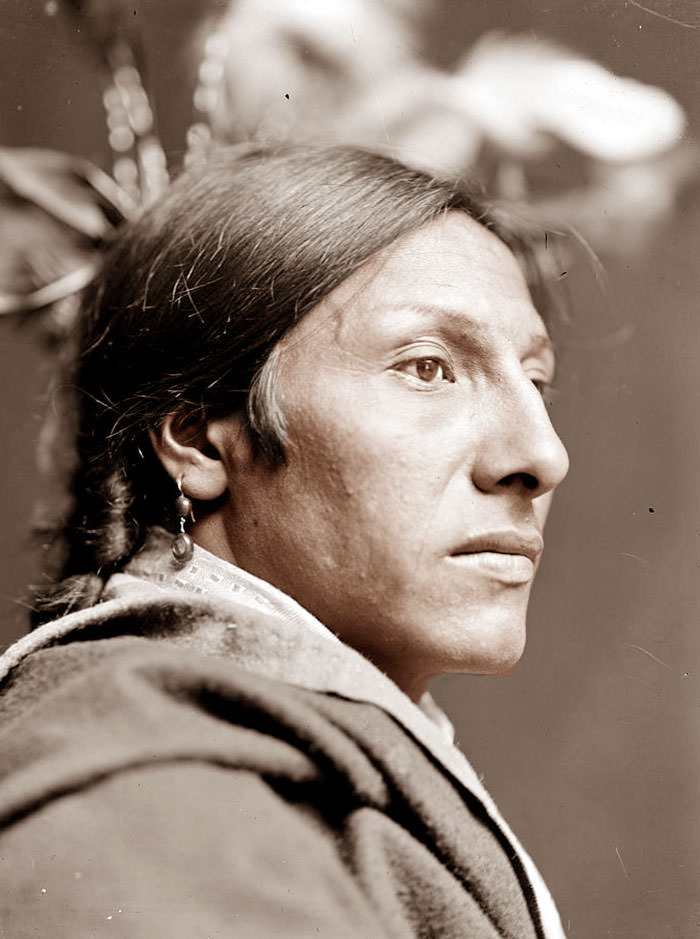
Amos Two Bulls is presented in an intimate profile that draws the viewer into the quiet strength of his expression. Soft studio light models the line of his cheek and brow, while the shallow depth of field lets the background dissolve into a gentle haze. The portrait feels less like a posed spectacle and more like a moment of stillness, inviting attention to texture—hair, skin, and cloth—rather than distraction.
Gertrude Käsebier’s photographic style is often associated with careful composition and a painterly softness, and that sensibility comes through in the calm balance of this image. A small earring glints at the edge of the frame, and the braid and garment read clearly even as the rest remains understated, suggesting dignity without embellishment. For anyone searching for Lakota portrait photography, early studio portraiture, or Native American history in archival images, the focus here is unmistakably on presence.
Colorization adds another layer to the viewing experience, emphasizing warmth in the skin tones and bringing out subtle contrasts that can be muted in older prints. Rather than changing the essence of the photograph, the added color encourages modern eyes to linger on details that might otherwise pass quickly. As a WordPress feature, this historical portrait works both as a compelling visual anchor and as a prompt to reflect on how photography shaped public perceptions of Indigenous people—and how careful viewing can restore individuality to the record.