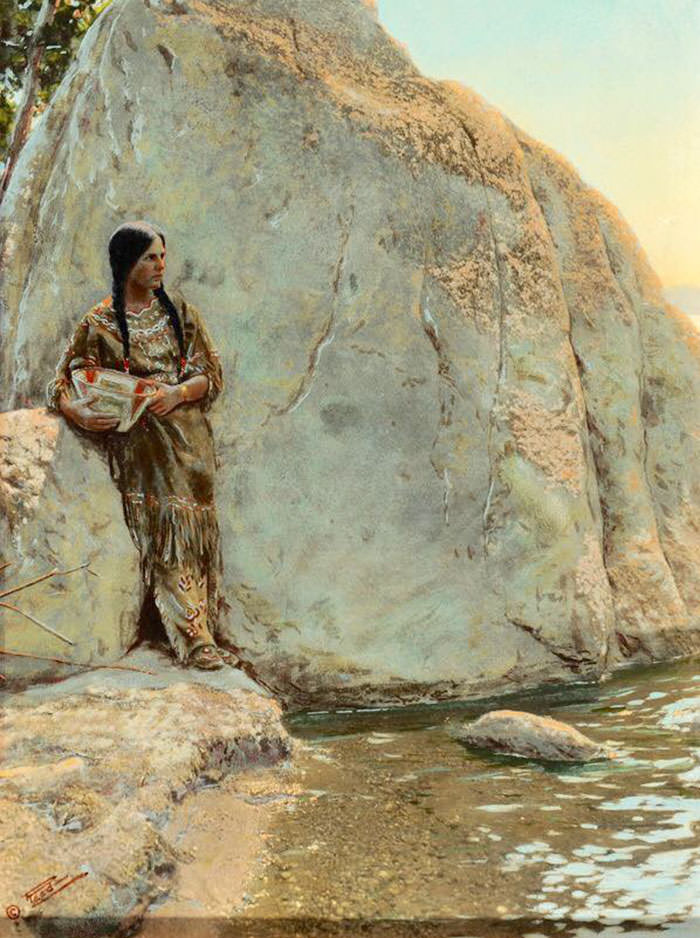
Poised beside a towering rock face at the water’s edge, an Ojibwe woman stands in quiet profile, her long braids framing a composed, attentive expression. The scene feels intimate and expansive at once: small ripples move across the shoreline while the pale stone behind her catches the light, turning the setting into a natural backdrop that emphasizes her presence rather than overwhelming it.
Her clothing draws the eye with layered textures—fringe along the skirt, patterned beadwork across the chest, and a draped shawl that suggests both warmth and ceremony. Cradled in her arms is a decorated container, its bands of color and design hinting at everyday utility intertwined with artistry. In this early-1900s portrait by Roland Reed, the careful pose and the outdoor setting speak to a period when photographers staged images that blended documentary interest with a romantic sense of place.
The colorization adds another layer of interpretation, bringing out earthy tones in fabric and stone and lending immediacy to details that might otherwise recede. As a WordPress feature, this historical photo invites viewers to linger over material culture—beadwork, textiles, and the relationship to land and water—while also prompting reflection on how Indigenous people were represented through the lens of early twentieth-century photography. Keywords such as “Ojibwe woman,” “Roland Reed,” “early 1900s,” and “colorized historical photo” help connect this image to broader searches in Native American history and vintage portrait photography.