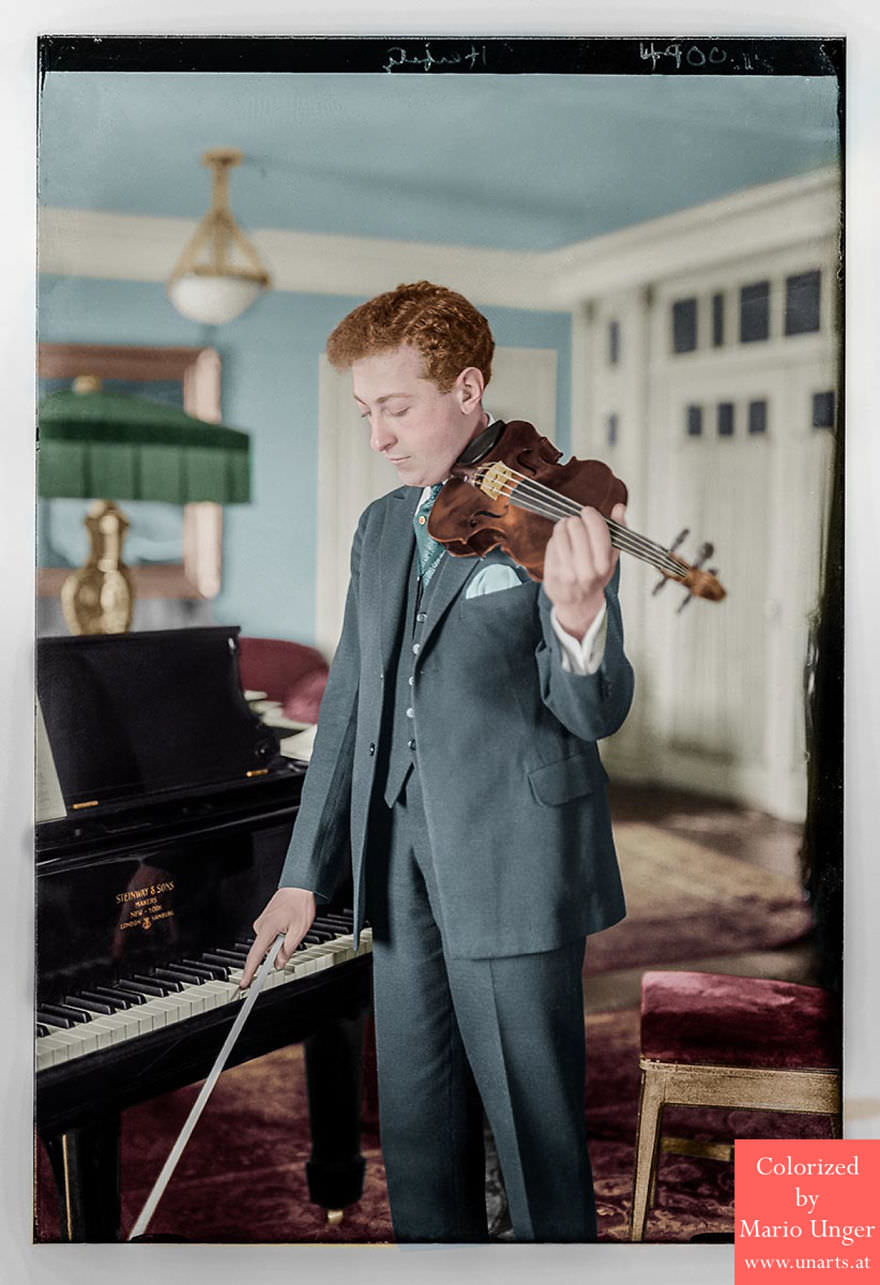
Poised between practice and performance, Jascha Heifetz stands in a well-kept interior with his violin tucked beneath his chin, eyes lowered in concentration. A grand piano sits close at hand, its open keys catching the light as if ready to answer the next phrase. The tailored suit, neatly folded pocket square, and calm posture suggest a musician already accustomed to high expectations, even in a private room.
Colorization brings a surprising intimacy to a scene often imagined only in monochrome, turning an early-20th-century moment into something almost immediate. Soft blue walls, warm wood tones, and the deep sheen of the piano frame the young virtuoso, while the patterned rug and upholstered chair hint at the comfortable domestic settings where great artistry was refined. The violin’s varnish glows against the muted palette, pulling the viewer’s attention to the instrument that defined his legend.
For readers interested in classical music history, early recordings, and the culture of concert life around 1920, this portrait offers more than a famous name—it offers atmosphere. The juxtaposition of violin and piano suggests rehearsal, collaboration, and the disciplined routine behind the brilliance heard on stage. As a WordPress feature image, “Jascha Heifetz, 1920” works beautifully for posts on violin virtuosos, musical childhoods, and the visual history of performance, with colorization adding a fresh way to connect with the past.