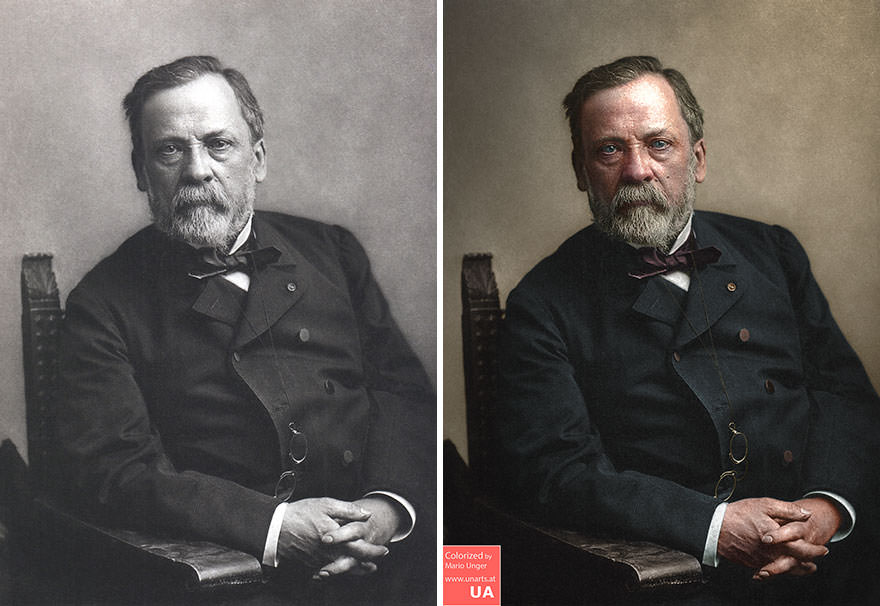
Louis Pasteur sits in a quiet, formal pose, his hands folded and his gaze steady, the kind of direct look that makes a 19th-century portrait feel immediate. The dark suit, neatly tied bow, and carefully groomed beard suggest a man accustomed to public attention, yet the plain background keeps the focus on expression and presence. For readers searching for “Louis Pasteur 1890” or a classic Pasteur portrait, this composition offers a clear, intimate view of the scientist late in life.
Colorization changes the experience of the photograph in subtle but powerful ways, bringing warmth to the skin tones and depth to the fabric that monochrome can only hint at. The contrast between the original and the restored version highlights how much information is carried in shadow and texture: the sheen of a lapel, the soft fall of light across the face, the weight of a seated posture. Rather than modernizing the past, the added color can make the era feel closer, as if the distance of time narrows by a few steps.
Seen alongside the title, the portrait invites reflection on Pasteur’s enduring place in the history of science, from laboratory breakthroughs to the broader cultural impact of germ theory and vaccination. Portraiture like this helped shape how the public imagined scientific authority—serious, composed, and unmistakably human. Whether you’re browsing historical photo colorizations, building a gallery of famous scientists, or researching Pasteur’s legacy, this image offers both visual richness and a strong sense of character.