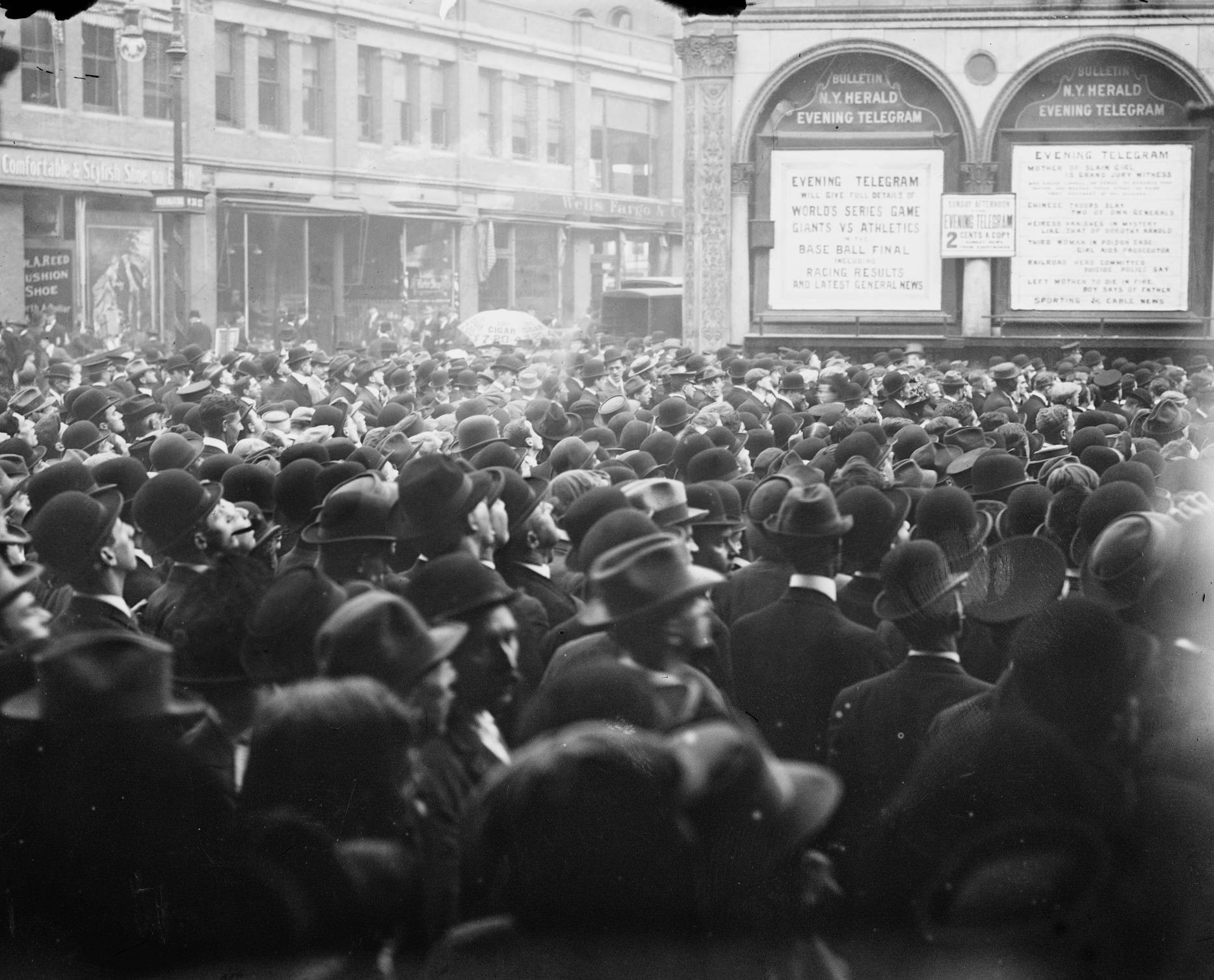
Outside the New York Herald Building, a sea of hats and upturned faces compresses into the street as fans hunt for the latest World Series news. The building’s arched bulletin boards dominate the scene, with “N.Y. Herald” and “Evening Telegram” signage towering over the crowd like a promise of updates. In an era before radio became commonplace, the sidewalk itself turned into a grandstand, and every posted line of text carried the weight of an inning.
On the bulletin, the matchup is spelled out—Giants vs. Athletics—anchoring this moment to the 1911 World Series and to the ritual of following baseball through newspaper extras. You can almost feel the pause between announcements: men in dark coats leaning forward, shoulders pressed together, waiting for the next score or play to appear. Nearby storefronts and street details fade into the background, reminding us how a championship could briefly reorder a city’s attention around a single doorway.
Crowd scenes like this are a vivid snapshot of early 20th-century baseball fandom, when devotion meant standing for hours in public just to keep pace with the game. The photograph also captures the newspaper’s role as a live information hub—part newsroom, part theater—where strangers became a temporary community bound by suspense. For readers drawn to vintage sports photos, the 1911 World Series, or the history of New York street life, it’s a striking reminder that the roar of the ballpark often echoed far beyond the stadium.