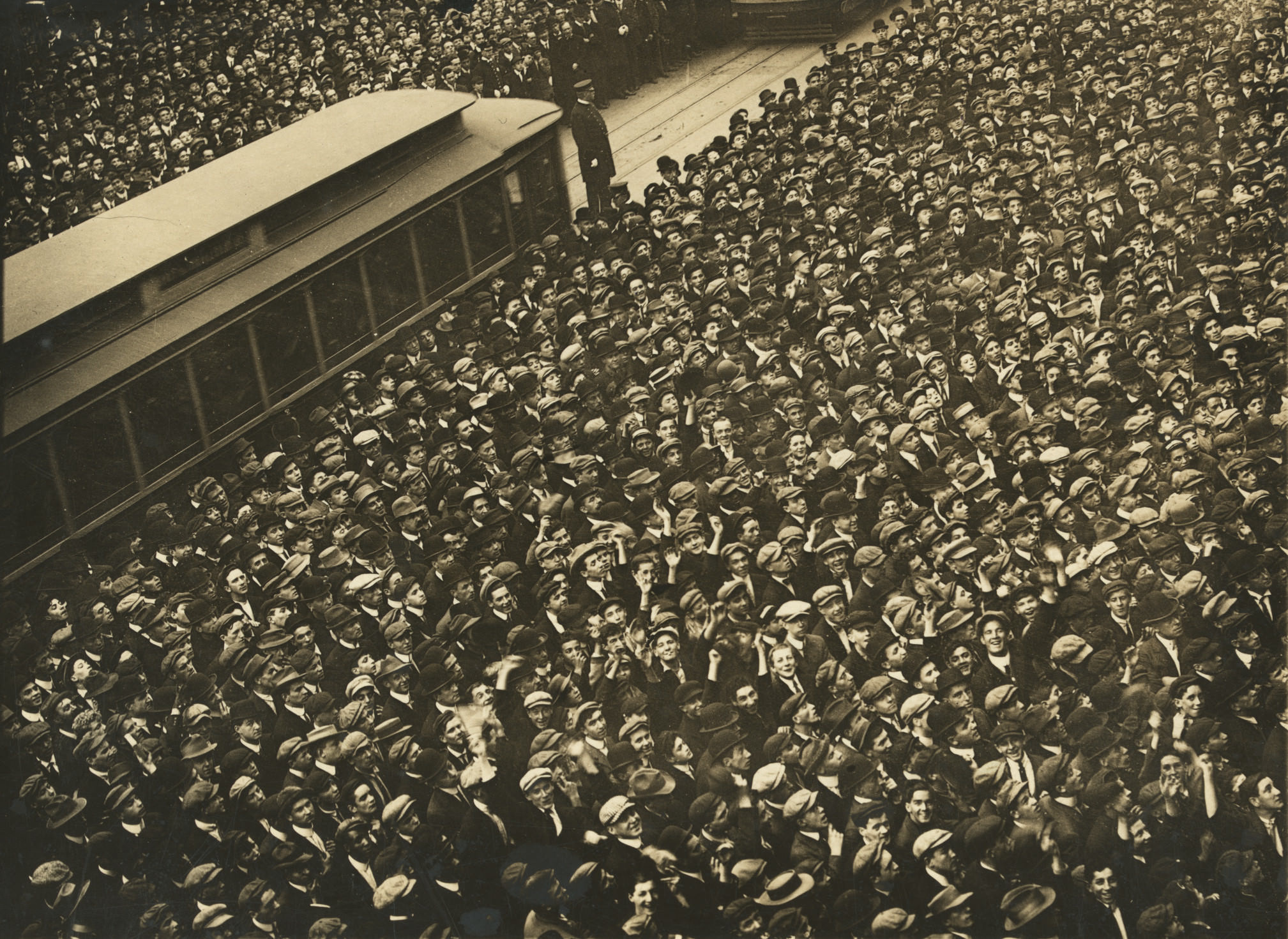
Outside the New York Herald Building, the street becomes an auditorium packed shoulder to shoulder, with faces tilted upward and hats pressed tight against the crush. A streetcar cuts a hard diagonal through the scene, a reminder that the city’s daily machinery kept moving even as thousands paused for the same shared thrill. The crowd’s expressions—grins, open mouths, raised hands—read like a live soundtrack to whatever was unfolding on the Play-O-Graph.
The Play-O-Graph was an early answer to a modern craving: real-time sports updates without being at the ballpark. Instead of radio or television, spectators gathered around a public display where the progress of a baseball game could be followed as it happened, turning news into performance and downtown into a communal grandstand. In the dense sea of caps, bowlers, and dark coats, you can feel how newspapers didn’t just report the game—they staged it.
Details in the photo reward a slow look, from the orderly lines at the edges to the spontaneous pockets of cheering nearer the center. It’s a striking snapshot of New York street life and early baseball fandom, when a headline could pull a “multitude of humanity” into the open air and make strangers react as one. For readers hunting vintage sports photography, old New York ephemera, or the origins of live game broadcasting, this image captures the moment public media became public spectacle.