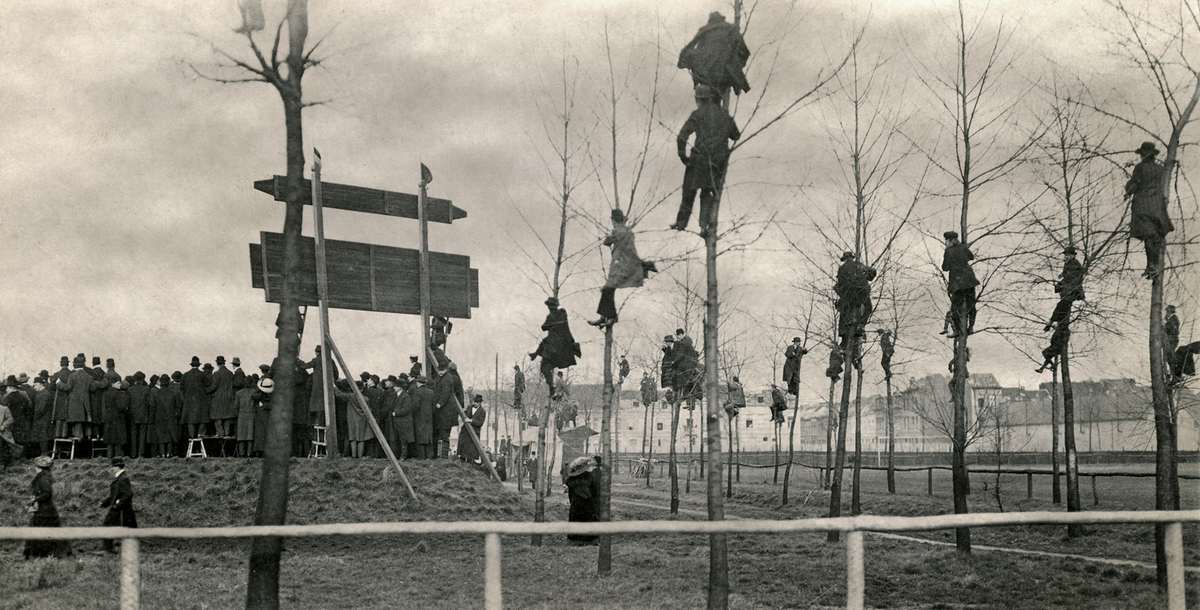
A row of slender, leafless trees becomes an impromptu grandstand as Belgian supporters climb for a better view of a game against Holland in 1913. Below them, a dense crowd in dark coats packs the sideline, while a few daring spectators perch high on trunks and branches, balancing with the casual confidence of people who refused to miss a moment. The scene feels both precarious and joyful—an early snapshot of football fandom before modern stadiums and strict barriers shaped how matches were watched.
What stands out is the ingenuity of ordinary spectators making the landscape work for them: trees as terraces, a grassy bank as seating, and open space doing the job of walls and turnstiles. The stark winter silhouettes emphasize how exposed these grounds were, with little separating fans from the field beyond a simple rail. It’s a vivid reminder that the rituals of cheering, craning for sightlines, and chasing the best vantage point are far older than television broadcasts and numbered seats.
For readers searching vintage sports photos, early football history, or the roots of European fan culture, this image captures a timeless truth—devotion finds a way. The Belgium vs Holland rivalry is only part of the story; the larger narrative is how communities gathered around sport and turned an ordinary matchday into a shared spectacle. Even more than the game itself, it’s the crowd’s resourceful enthusiasm that lingers in the mind.