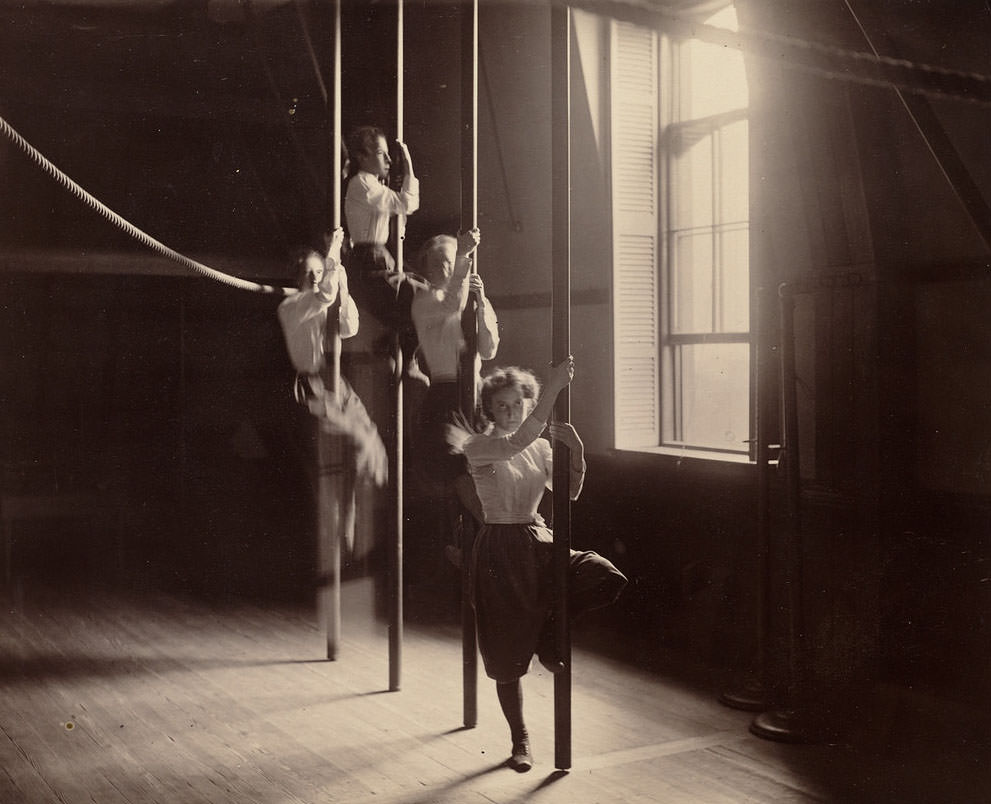
Sunlight pours through tall classroom windows onto a polished wooden floor, where students in long skirts and buttoned blouses practice a rope-and-pole exercise that feels equal parts play and discipline. The scene is set indoors, suggesting a school gymnasium or multipurpose hall, with sturdy vertical poles and thick ropes forming a simple apparatus for climbing, swinging, and balance. Faces blur with motion, hinting at the effort and energy required—an everyday workout made extraordinary by the era’s clothing and the photographer’s timing.
Boston’s late-19th-century school athletics often emphasized “physical culture,” a blend of calisthenics, posture training, and supervised games meant to build strength, coordination, and character. In these rare historical photos of students exercising in the 1890s, you can see how structured movement was folded into education, even for children who spent much of their day at desks. The equipment looks minimal by modern standards, yet it demanded agility, grip strength, and confidence—skills that gym classes still aim to develop today.
What makes this image so compelling is its quiet detail: the patterned light on the floorboards, the darkened corners of the room, and the way the ropes lead the eye upward, emphasizing vertical motion. For readers searching for Boston school history, early American sports, or vintage physical education, this photograph offers a vivid glimpse into how students trained before modern uniforms and standardized gym facilities. It’s a small window into a larger story—how schools used sport and exercise to shape bodies, routines, and expectations at the turn of the century.