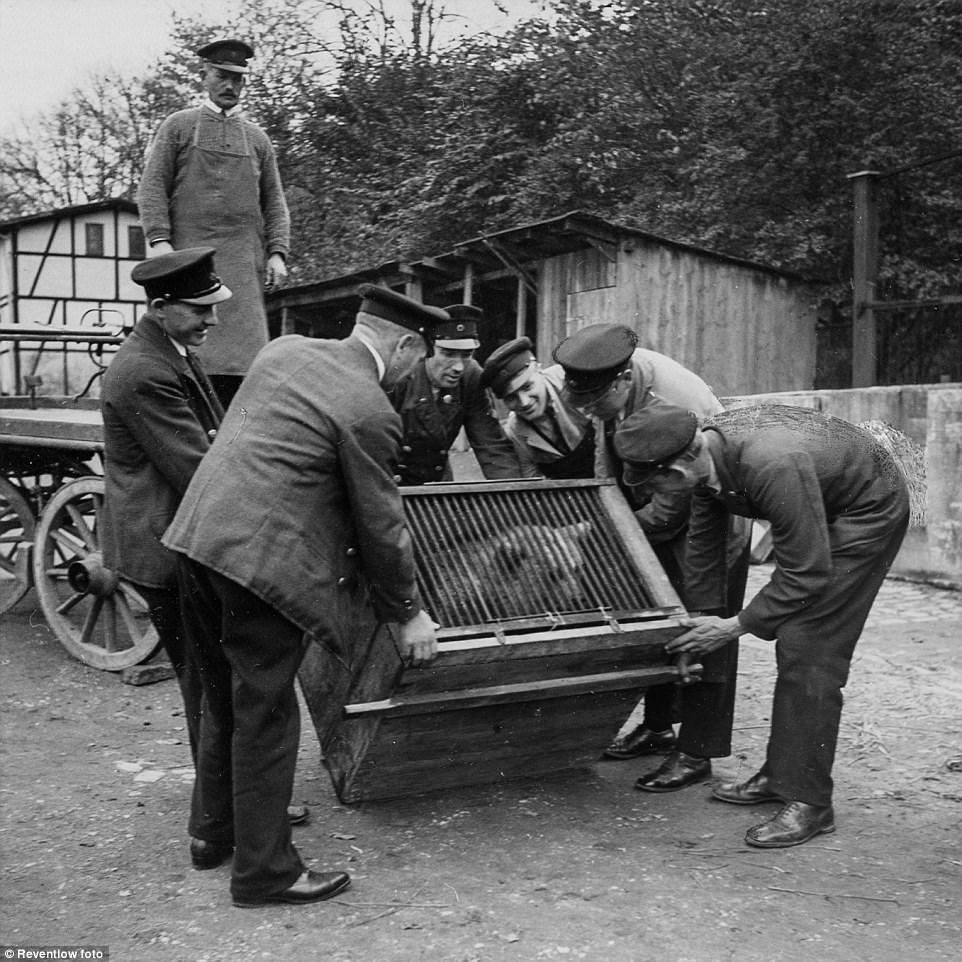
A small crowd of uniformed men leans in around a stout wooden crate, their caps tipped forward as they peer through the slats at the zoo’s newest arrival. One man braces himself on the cart behind them, apron on and posture alert, while the group carefully grips the box as if testing its weight and the occupant’s mood. Even without seeing much of the animal inside, the scene carries that unmistakable mix of caution and curiosity that comes with introducing a bear to a public menagerie.
Behind the action, simple sheds and a fenced yard suggest the practical, workmanlike side of a 1930s zoo—less polished spectacle, more daily labor and improvisation. The crate itself hints at the era’s animal transport methods: sturdy carpentry, minimal visibility, and human hands doing the heavy lifting. It’s a moment of transition, when a wild creature becomes an “exhibit,” and a routine delivery turns into a small event for everyone present.
What makes the photograph so engaging is its quiet humor: serious faces gathered around a box that likely contains a very unimpressed bear. For readers interested in zoo history, vintage animal care, and the behind-the-scenes reality of early twentieth-century attractions, this image offers an authentic glimpse of how new animals were received and handled. The title says it plainly—“a bear became new member of the zoo in 1930s”—and the picture fills in the story with texture, tension, and a touch of everyday comedy.