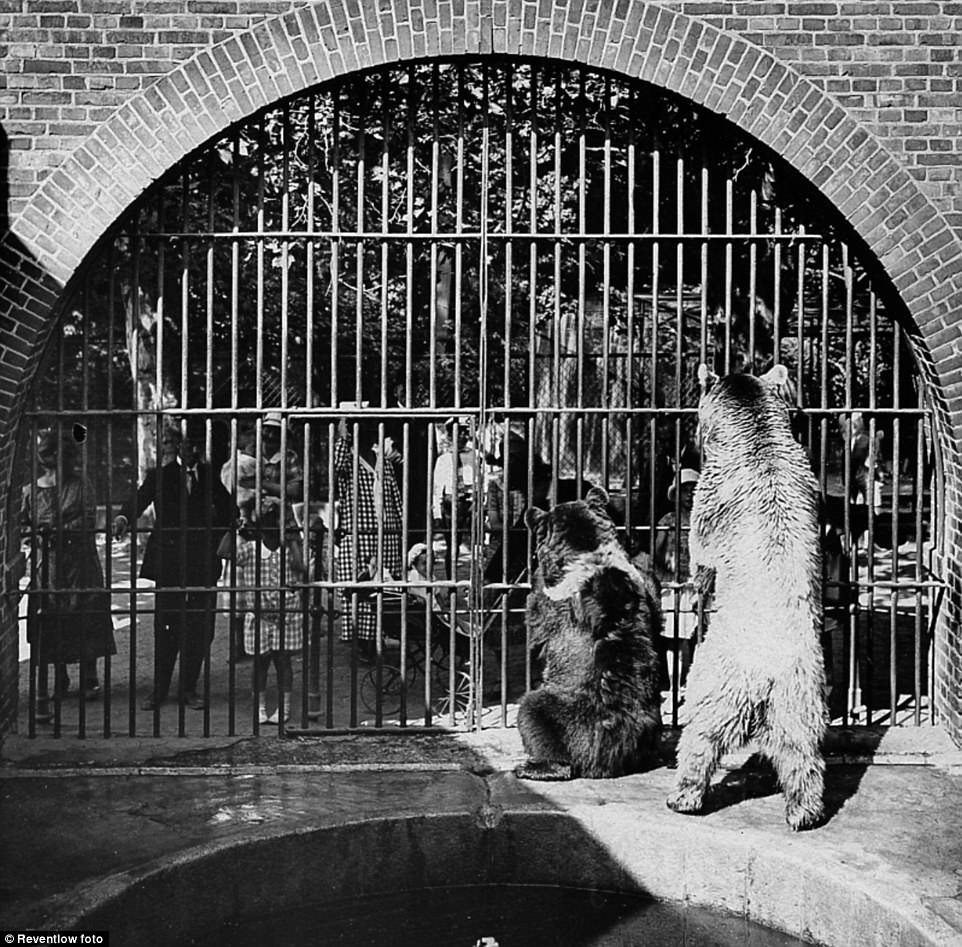
Under a broad brick arch, two bears linger at the edge of their enclosure, drawn toward the bustle beyond the iron bars. One sits back on its haunches like a patient onlooker, while the other rises upright, paws braced as if trying to get a better view. The contrast between shaggy fur and rigid metalwork gives the scene a stark, unforgettable clarity.
Behind the grating, a small crowd gathers—figures in everyday street clothes, a stroller, and faces turned toward the animals with the quiet thrill of a public outing. It’s a snapshot of zoo-going as a shared ritual, when wildlife was often encountered through masonry, steel, and spectacle rather than through conservation messaging. Even without a captioned place or date, the composition speaks to a familiar chapter of urban leisure and curiosity.
What makes this historical photo so compelling is its reversal of the gaze: the visitors are on display too, framed by bars from the bears’ point of view. The title, “Two bears looking outside curiously,” feels earned, because their posture reads like genuine attention—part wonder, part waiting. For readers searching for a funny vintage animal photo or an evocative glimpse of early zoo history, this image delivers both charm and a subtle story about how humans and animals once met in public spaces.