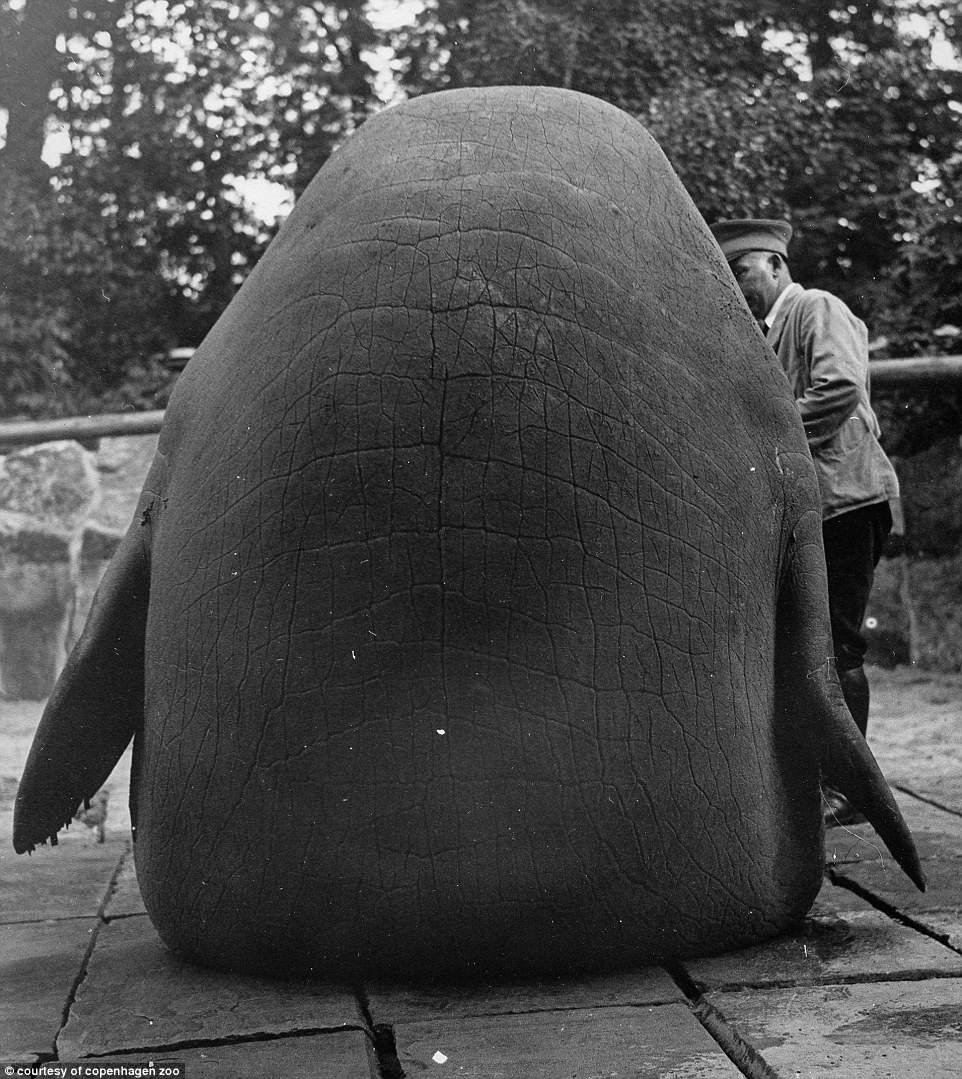
From behind, the elephant seal becomes a living landscape—an enormous, rounded mass of wrinkled skin that nearly fills the frame and makes the paved ground look suddenly small. The photographer leans into the comedy of scale by letting the animal’s back dominate the scene, turning an everyday moment into a visual punchline without needing any caption at all. Even in monochrome, the texture stands out: creases like dried riverbeds, soft edges where the flippers rest, and a weighty stillness that suggests the seal is perfectly content to be unmoved.
Off to the right, a uniformed keeper provides the crucial measuring stick, half-hidden and dwarfed beside the animal’s bulk. The setting reads like a zoo or managed enclosure, with stonework and fencing in the background and leafy trees above, hinting at a public space where visitors might have gathered to marvel. It’s a small slice of earlier wildlife display culture, when proximity and spectacle were often the main attractions—and a single photograph could carry the astonishment home.
The title, “A giant elephant seal from behind,” fits because the viewpoint itself is the joke and the lesson: size is best understood when it blocks your view of everything else. For readers interested in historical animal photography, zoo history, or simply oddball vintage images, this shot offers both humor and a tactile sense of presence. Look closely and you can almost hear the quiet shuffling on the stones, the keeper’s cautious steps, and the murmurs of onlookers trying to decide whether to laugh, gasp, or do both.