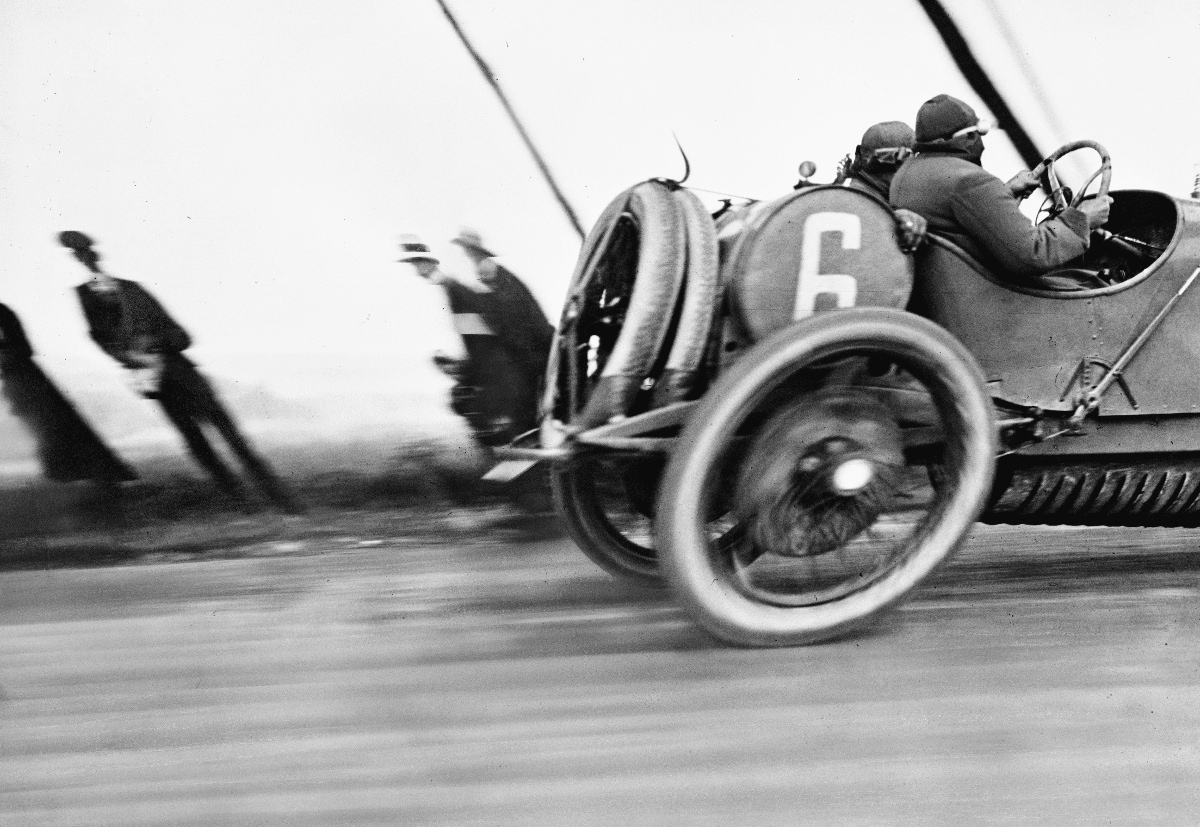
Speed dominates the frame as car number 6 tears past the camera, its spoked wheels dissolving into a blur and its body pitched low over the road. Two bundled occupants ride in the open cockpit, faces turned forward beneath caps and goggles, while the background spectators stretch into streaks—evidence of a fast shutter chasing even faster motion. The photograph’s slight tilt and smear of dust at ground level make the moment feel immediate, like the viewer is standing right at the edge of the course.
In the Grand Prix de L’Automobile Club de France of 1912, racing was as much endurance trial as sporting spectacle, and the machines wore that hardship openly. Exposed mechanical parts, narrow tires, and a spare lashed to the side speak to long distances, rough surfaces, and the constant risk of punctures or mechanical failure. The clothing, posture, and close quarters of the crew hint at a time before modern safety cells—when courage, skill, and improvisation were essential equipment.
What lingers is the contrast between the crisp white of the race number and the rushing world around it, a visual shorthand for early motorsport’s mix of precision and chaos. For historians and racing fans alike, this is a vivid window into pre-war Grand Prix culture, when innovation and athletic daring met on public roads. Whether you’re searching for 1912 Grand Prix imagery, early 20th-century auto racing history, or classic motorsport photography, this scene captures the raw tempo of an era learning how fast “fast” could be.