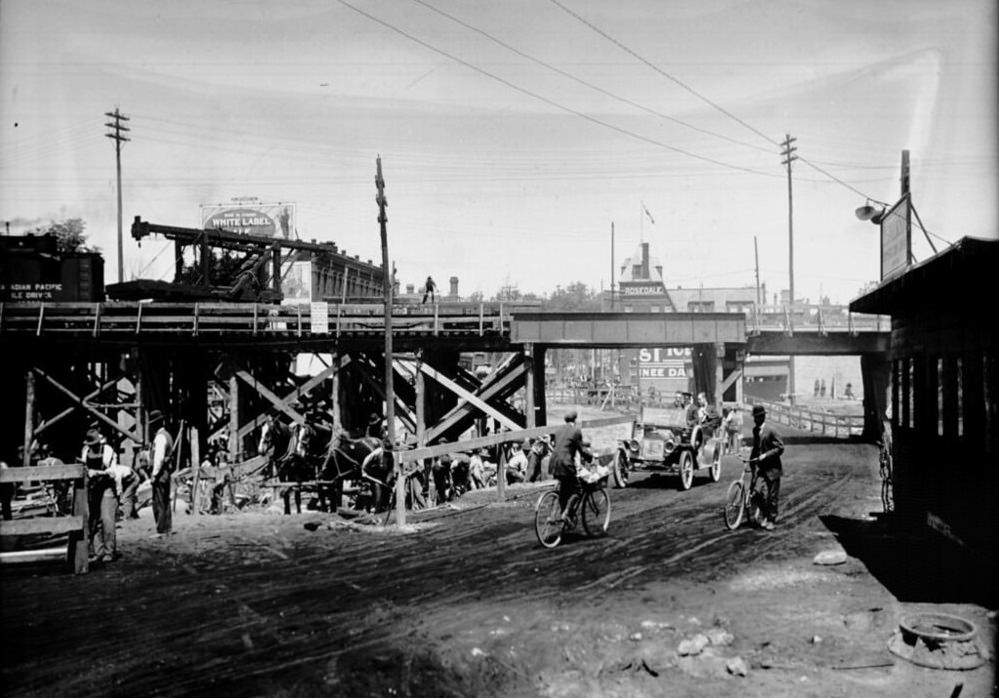
Rising above a rough, rutted roadway, the wooden trestlework and temporary bridges along Yonge Street near Summerhill hint at a city in the middle of change. Utility poles and overhead wires cut across the sky, while clusters of workers gather beneath the structure, turning the corridor into a busy worksite rather than a polished boulevard.
Down at street level, cyclists glide through the construction zone with the steady confidence of everyday commuters, sharing space with early automobiles and pedestrians at the edge of the road. The scene underlines how practical cycling already was in Toronto in the early 1900s—an affordable way to move through a growing city even when the streets were dusty, uneven, and interrupted by major infrastructure projects.
For readers interested in Toronto history and the roots of urban cycling, “Yonge Street near Summerhill, 1915” offers a vivid snapshot of transportation in transition. It’s an image that connects sports and mobility, showing bicycles not as a novelty but as part of the street’s daily rhythm, alongside the construction that would shape Yonge Street for decades to come.