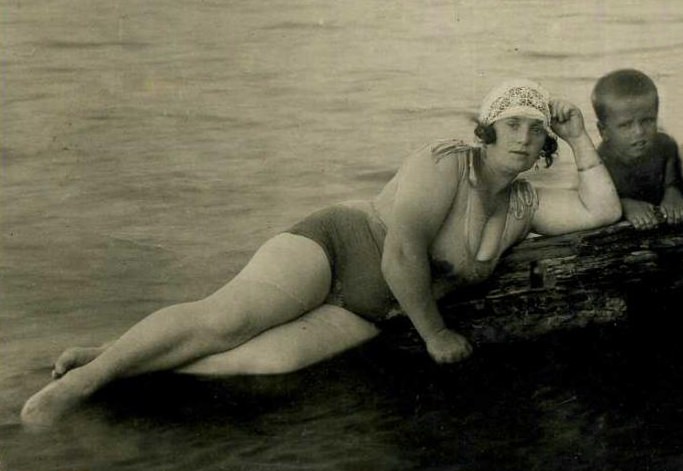
Leaning against a water-worn log at the river’s edge, a young woman in a one-piece swimsuit fixes the camera with an unhurried, steady gaze. The composition is simple—bare shoreline, rippling water, and two figures close to the surface—yet it carries the quiet confidence that made Soviet-era sport imagery so compelling. Her relaxed pose still reads as athletic: the body at ease, but ready, as if rest is simply another part of training.
In the 1930s, Soviet sports culture promoted “physical culture” as both personal discipline and public ideal, and photographs like this helped popularize the new model of the strong, capable woman. Swimwear, outdoor light, and the open water suggest more than leisure; they hint at endurance, health, and modernity, themes often celebrated in vintage USSR sport photography. Even without banners or stadiums, the scene speaks to an era that valued strength as a form of civic virtue.
Alongside the main subject, a second figure watches from behind the log, adding a candid, everyday feeling that softens the propaganda stereotype and makes the moment feel lived-in. The grain, tonal softness, and casual framing place it firmly in the visual language of early twentieth-century snapshots, while still aligning with the title’s promise of “strong bodies, strong will.” For collectors and readers searching for Soviet sport girls, 1930s fitness history, or vintage swimming photos, this image offers an intimate window into how athletic identity was pictured—and practiced—by ordinary people.