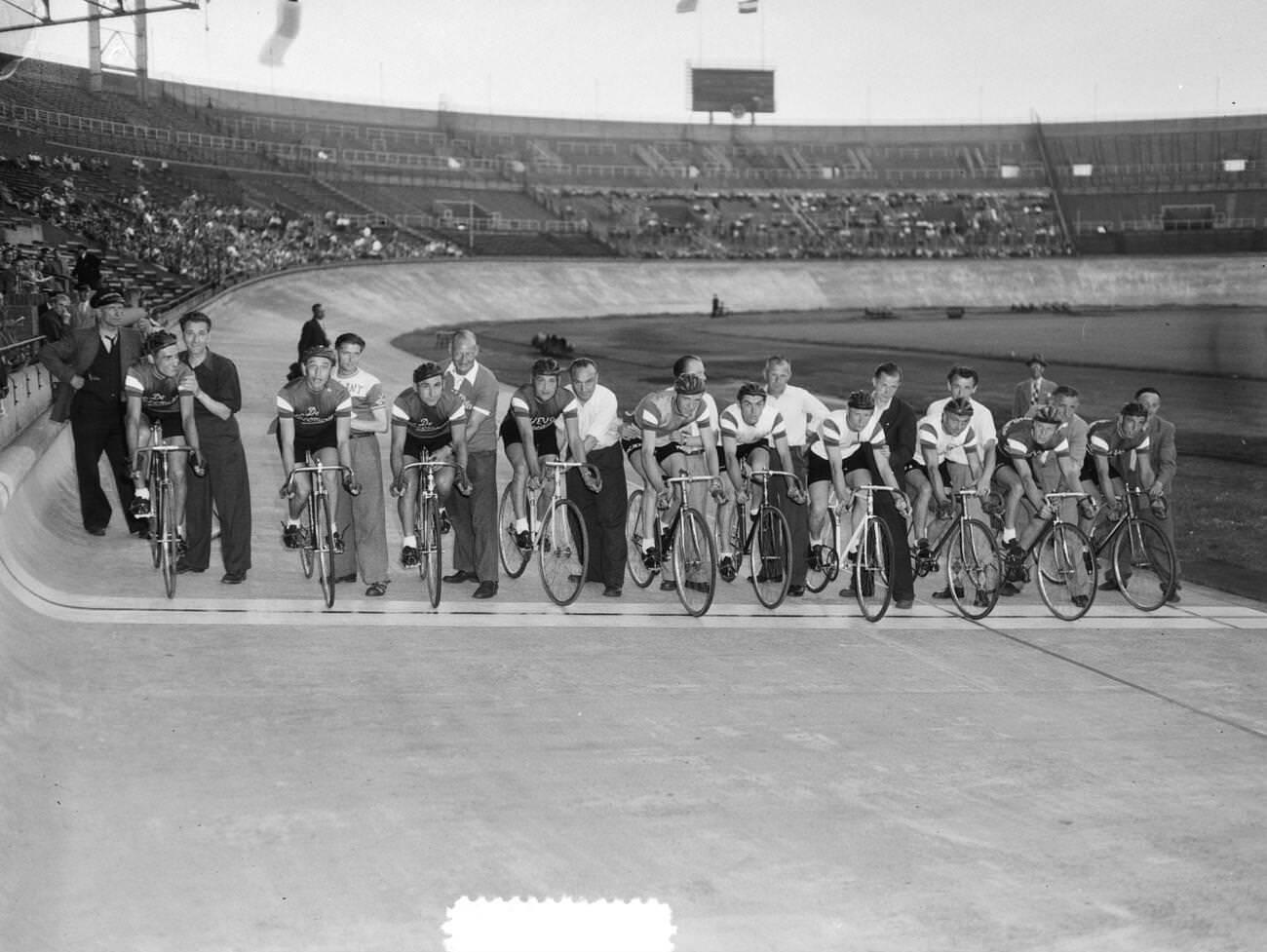
Lean and focused, a line of Tour de France riders poses on the banked track inside an Olympic Stadium in 1953, their drop-bar road bikes angled toward the camera as if awaiting a signal. Team jerseys and caps create a patterned rhythm across the group, while a few staff and officials stand close by, grounding the scene in the practical routines of race logistics. In the background, the sweeping curve of the velodrome and scattered spectators in the stands give a sense of scale and anticipation.
What stands out is the contrast between spectacle and work: the stadium architecture frames a moment that is more organized than celebratory, a brief pause before movement. Faces are set, hands rest on handlebars, and wheels align along the painted edge of the track, emphasizing discipline as much as athleticism. Even without a visible finish banner or podium, the setting evokes the grand entrances and ceremonial laps that surrounded mid-century cycling.
For anyone interested in Tour de France history, 1950s sports photography, or the culture of European road racing, this photograph offers a vivid snapshot of an era when teams were tightly knit units and equipment still carried a handmade austerity. The Olympic Stadium setting adds another layer, linking cycling’s endurance tradition to venues designed for mass audiences and national pride. It’s an evocative reminder that behind every legendary stage and mountain climb were quieter moments of preparation on tracks like this.