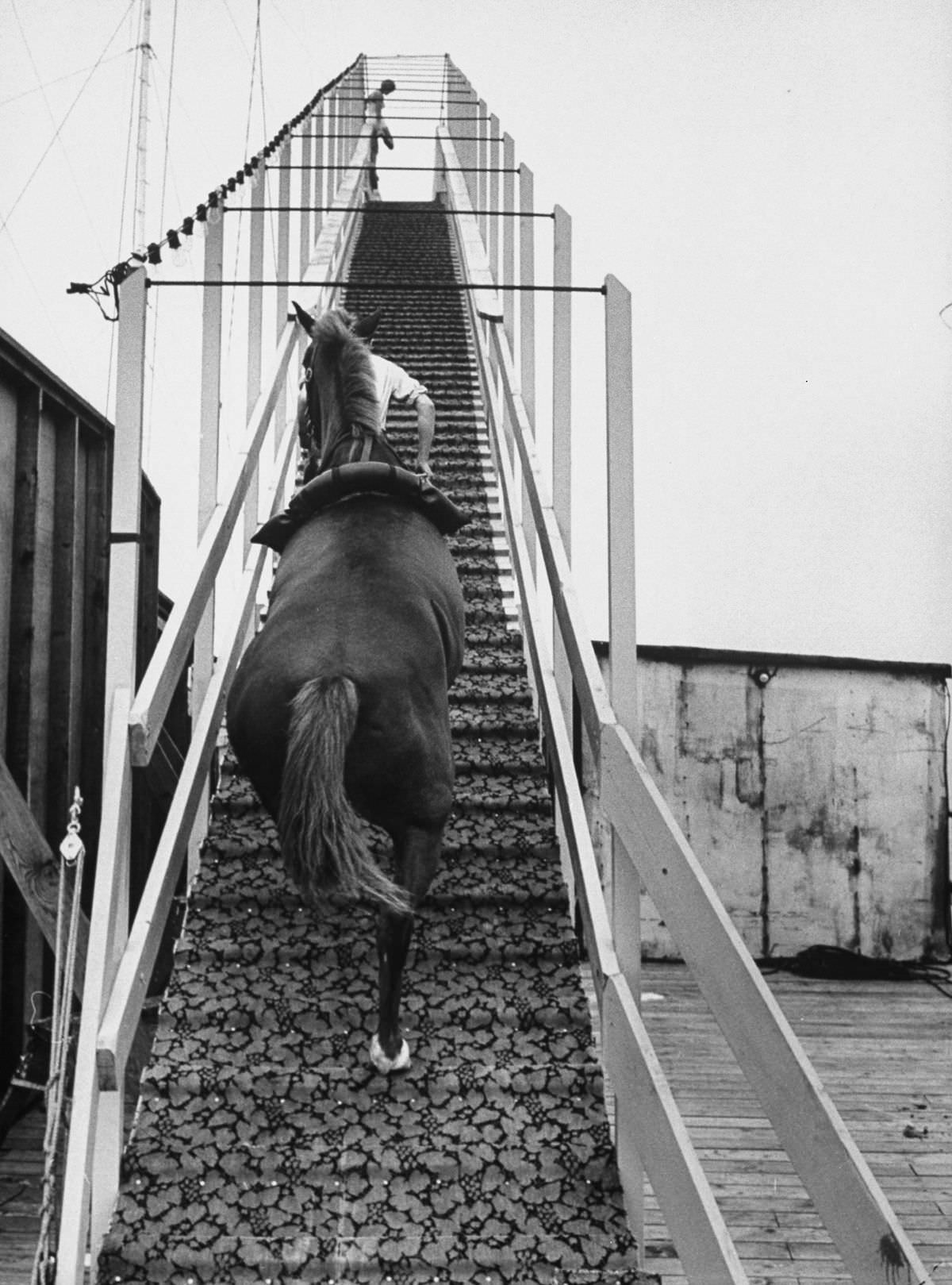
Dimah climbs steadily up a steep, narrow ramp, the diving platform rising like a scaffolded tower above the boardwalk. The camera’s low angle emphasizes the height and the risk, with simple wooden rails hemming horse and handler into a single path skyward. Even before the leap, the stunt’s drama is in the ascent—hoof by hoof, toward a drop measured at forty feet.
In 1953, horse diving was marketed as thrilling sports entertainment, blending showmanship, training, and spectacle into one heart-stopping routine. The rider’s posture and the horse’s forward focus hint at practiced choreography, while the stark lines of the structure and the open sky make the scene feel exposed and precarious. It’s a reminder of how mid-century audiences flocked to acts that tested limits, often without the safety culture expected today.
Behind the headline stunt sits a complicated history: popular amusement performances that dazzled crowds while raising enduring questions about danger, labor, and animal welfare. Details in the frame—the textured ramp surface, the utilitarian construction, and the long climb—underscore how much of the feat depended on preparation as much as bravery. For readers searching for a 1950s horse diving photo or the story of Dimah’s famous ramp ascent, this image preserves the tense moment before the plunge.