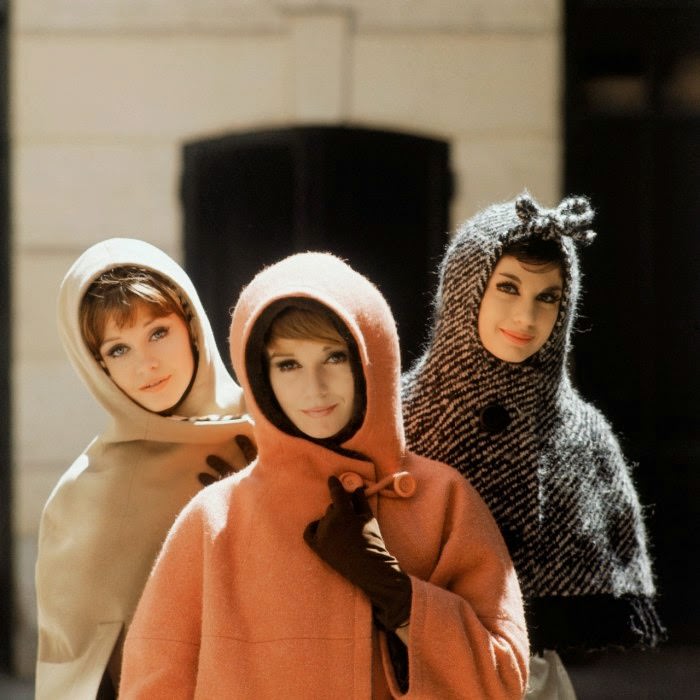
Warm light falls across three models grouped close together, their faces framed by sculpted hoods that turn outerwear into portraiture. A pale, creamy coat on the left reads clean and architectural, while the center look introduces a soft blush tone fastened neatly at the throat, the silhouette rounded and deliberately cocooning. On the right, a darker, textured wrap with a knotted detail suggests a more graphic mood, its pattern catching shadow and sparkle as the fabric curves around the head and shoulders.
Autumn–Winter 1961 haute couture comes through here as a study in protection and polish, where practicality is elevated into statement design. The heavy, plush surfaces imply cold-weather luxury, yet the styling remains refined—gloves, controlled lines, and careful closures that emphasize craftsmanship. Even without a runway in view, the scene has the poised stillness of a fashion house presentation, with each look meant to be read for its materials, color harmony, and finish.
References like “Jungle,” “Canada,” and “Amsterdam models” point toward the era’s fascination with travel, place-names, and mood-driven themes—labels that helped couture collections feel worldly and modern. For readers exploring 1960s fashion history, this image offers a crisp snapshot of how designers used volume, texture, and hooded forms to reshape the winter wardrobe. It’s a small tableau of couture confidence, where outerwear becomes the main event and the season’s story is told in wool, weave, and silhouette.