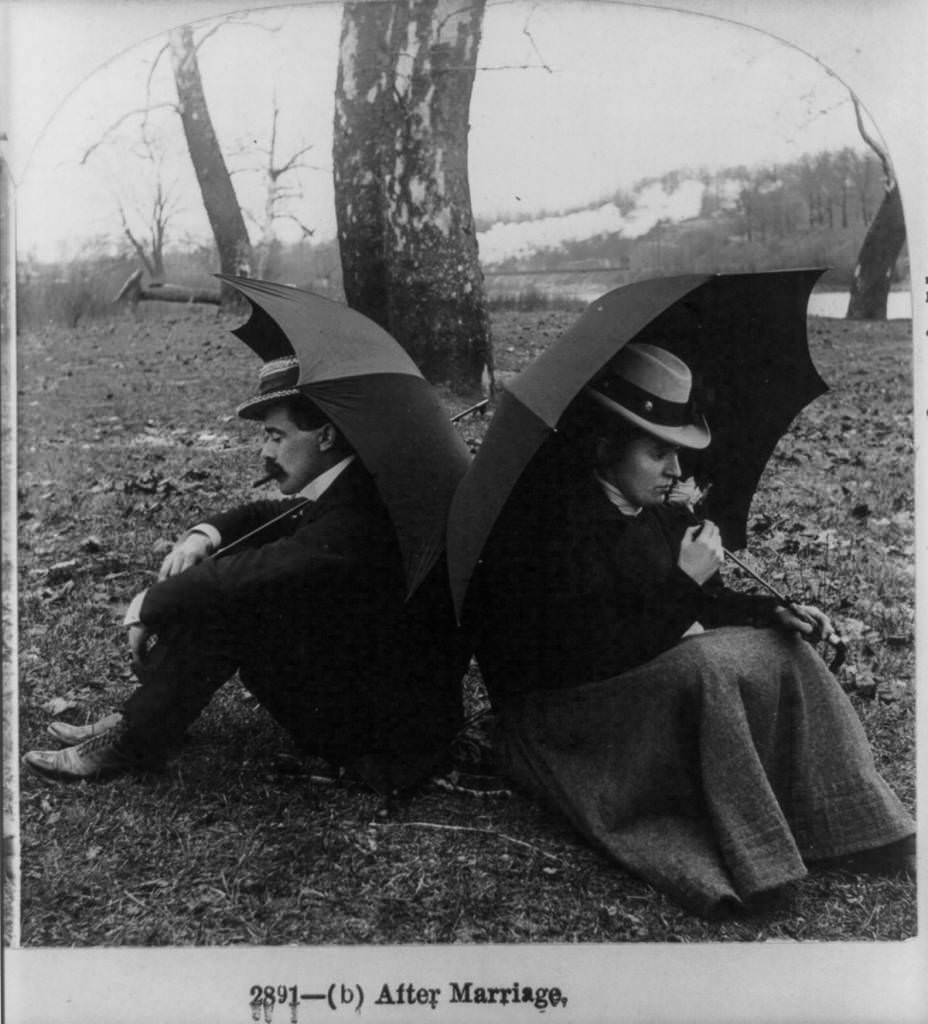
Against a bare tree in a quiet park, a husband and wife sit back-to-back, each tucked beneath a wide umbrella like a private shelter. Their stiff hats and dark coats ground the scene in turn-of-the-century style, while their mirrored posture—close enough to touch, yet turned away—delivers the joke promised by the title, “After Marriage (1900).” Even without dialogue, the body language reads as a comic pause after the ceremony, when romance meets routine.
Early 1900s humor often leaned on exaggerated domestic moods, and this staged moment plays that tradition with a straight face. The umbrellas act almost like a prop wall, carving one shared space into two separate worlds, and the couple’s downcast gazes suggest a melodramatic “we’re not speaking” quarrel. For viewers interested in social history, it’s a small window into how marriage, gender expectations, and everyday tensions were turned into light entertainment.
Beyond the punchline, the photograph rewards a closer look at period details: the brimmed hats, the tailored silhouettes, and the outdoor setting that hints at leisure time and public courting rituals. “After Marriage (1900)” works beautifully in a collection of vintage comedy photos, early photography, or Edwardian-era life, offering both a playful narrative and a textured snapshot of the era’s visual storytelling. It’s funny, yes—but it’s also a reminder that relationship jokes have very long roots.