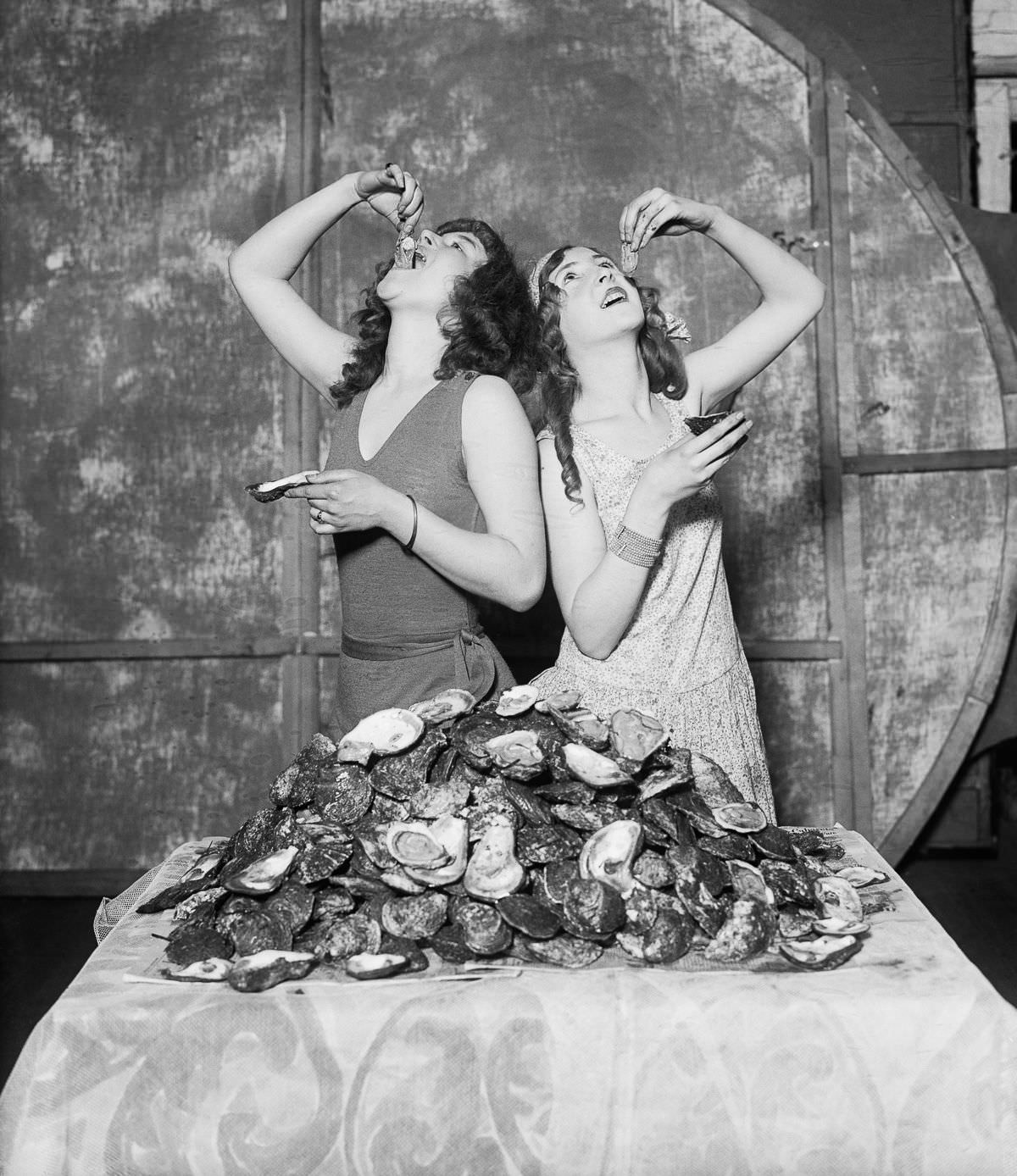
Lois and Ruth Waddell lean into the moment with theatrical gusto, heads tipped back as they drop oysters from shell to mouth, each woman balancing a half-shell in one hand like a prop in a lively stage act. In front of them sits an extravagant mound of emptied shells and fresh bivalves spread across a draped table, the sheer volume turning a simple seafood snack into a spectacle. The plain backdrop only heightens the drama, directing the eye to their expressions and the mountain of oysters that makes the title’s claim feel startlingly plausible.
What makes the scene so memorable is how it blends everyday appetite with the era’s taste for publicity stunts and novelty feats. A combined total of 204 oysters—if taken at face value—reads like a headline designed for newspaper laughter, a quick jolt of astonishment, and a story to retell at the next gathering. Even without extra context, the image radiates the playful competitiveness of a food challenge, the kind of comedic bravado that helped make ordinary people briefly famous in the public imagination.
Beyond the joke, the photograph offers a textured glimpse into early-20th-century food culture, when oysters were a familiar indulgence and a ready-made symbol of abundance. The women’s sleeveless dresses, styled hair, and confident posture add a modern energy that cuts through the years, reminding us that humor and showmanship are hardly new inventions. For anyone searching for a funny historical photo, a 1920s oyster-eating contest, or a quirky slice of social history, this image delivers a crisp, salty bite of the past.