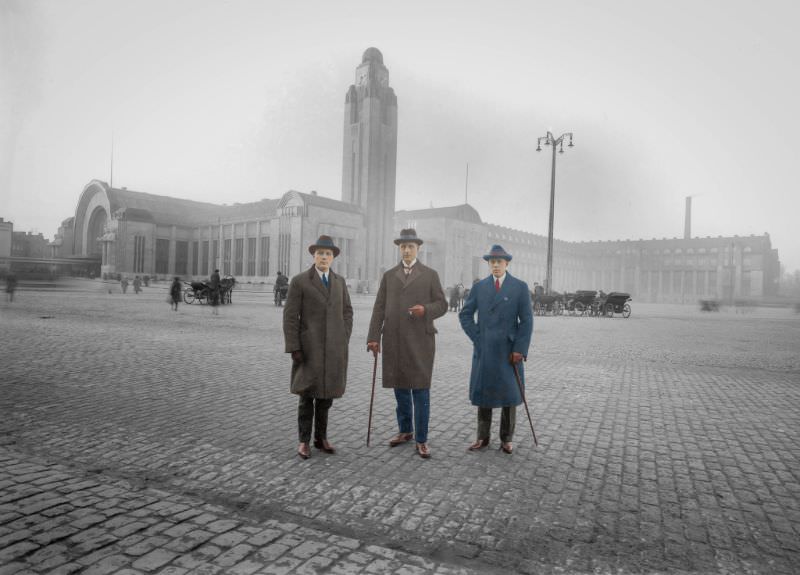
Against the broad cobblestone square, three well-dressed gentlemen stand with the calm self-possession of men posing for a special occasion, their long overcoats, brimmed hats, and walking sticks lending a formal air. A careful colorization adds quiet realism—muted blues and browns emerging from the original tones—while preserving the period feel. The open space around them makes their presence feel deliberate, as if the city itself is part of the portrait.
Rising behind them, Helsinki’s new railway station dominates the scene with monumental arches and a tall central tower that signals modern ambition. Even without close detail, the architecture reads as a civic statement: rail travel was not merely practical, but a symbol of progress and connection. In the middle distance, small figures and a few vehicles hint at everyday movement, reminding us that this grand façade served ordinary departures, arrivals, and routines.
Moments like this help anchor the 1900s in something tangible—a meeting point of fashion, public space, and new infrastructure at the heart of Helsinki. The men’s poised stance suggests pride, perhaps even a sense of belonging to a changing era when the railway station reshaped how people experienced distance and time. For readers interested in Helsinki history, early 20th-century street life, or historic railway architecture, this colorized photo offers a vivid doorway into the city’s past.