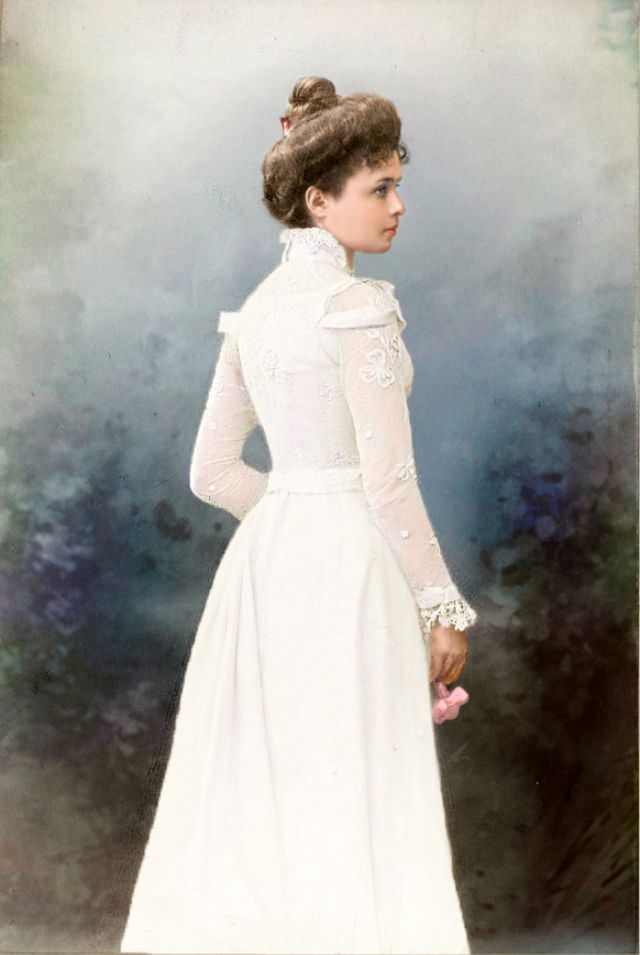
Poised in profile against a softly blended studio backdrop, a young student from the Institute for Noble Maidens in St. Petersburg embodies the quiet formality of the 1900s. The colorization brings out delicate contrasts—warm skin tones, deep brown hair arranged high, and the pale sheen of a carefully pressed gown—turning what might feel distant into something immediately human and present.
Her dress is a study in late-imperial refinement: a high collar, fitted bodice, and sheer sleeves traced with subtle embroidery, finished with lace at the cuffs. Even the small pink ribbon held at her side feels intentional, a restrained accent in an otherwise disciplined palette, suggesting the etiquette and composure expected within elite girls’ education of the era.
Seen today, the portrait reads as more than a fashion record; it hints at a whole institution built around rank, manners, and preparation for society in pre-revolutionary Russia. For anyone searching the Institute for Noble Maidens, St. Petersburg history, or exploring colorized photographs of Imperial Russia, this image offers a vivid, intimate glimpse of how identity was shaped—stitched into fabric, posture, and the careful stillness of a studio sitting.