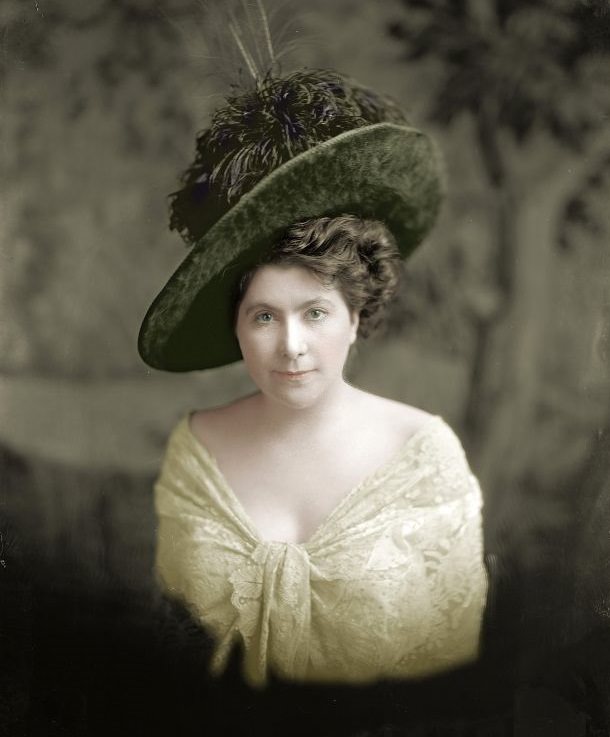
Miss Atwood faces the camera with a calm, steady gaze, her features softened by careful colorization that brings warmth back to an era often seen only in gray tones. An oversized, dark hat—wide-brimmed and lavishly trimmed with feathers—frames her curled hair and turns a simple studio portrait into a statement of fashion and confidence. The pale wrap or gown at her shoulders catches the light, creating a gentle contrast against the muted, painterly backdrop.
Details like these hint at the rituals of early portrait photography: the composed posture, the deliberate styling, and the quiet drama of accessories chosen to read well on film. The background remains intentionally vague, keeping attention on face and silhouette, while the retouching and color work suggest a modern effort to restore texture, complexion, and fabric tones without overpowering the original mood. In that balance between authenticity and artistry, the sitter feels closer—less like a distant figure and more like a person paused mid-thought.
For readers searching for a colorized historical photo portrait, “Miss Atwood” offers a vivid example of how fashion and photographic technique shaped personal presentation. The hat’s bold profile, the soft drape of the garment, and the studio setting together evoke a time when being photographed was an event, not an everyday habit. Share your impressions in the comments—does the colorization change how you read her expression, or the story you imagine behind it?