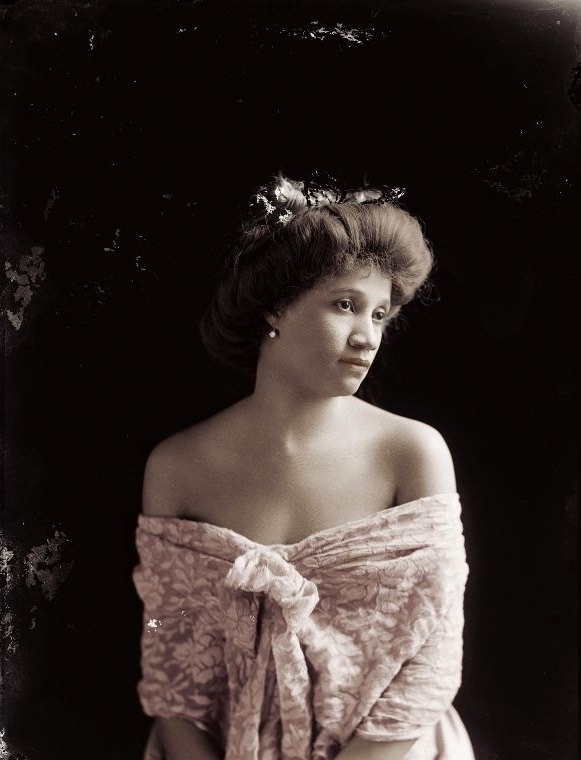
Soft studio lighting and a dark, uncluttered backdrop draw the eye to Mrs. Feldman’s quiet pose, her gaze turned slightly away as if caught between thought and conversation. The colorization adds a gentle warmth to her complexion and gives depth to the shadows, making the portrait feel less like an artifact and more like a moment held in suspension. Fine wear along the edges of the original print—specks, scratches, and fading—remains visible, reminding us that this is a surviving object with a long journey behind it.
Her styling suggests a formal sitting: a carefully arranged coiffure with a decorative hairpiece, small earrings, and an off-the-shoulder wrap or shawl tied at the front with a prominent bow. The fabric’s floral pattern becomes easier to read in color, emphasizing texture and craftsmanship that black-and-white often flattens. Nothing in the frame competes with her; the photographer’s choices keep attention on expression, posture, and the subtle set of her shoulders.
Portraits like this were more than personal keepsakes—they were statements of identity meant to be shared, mailed, framed, and remembered. As a restored and colorized historical photo, “Mrs. Feldman” invites viewers to look past the surface prettiness and consider the social expectations, fashion, and studio practices of the era that produced it. For anyone interested in genealogical photography, vintage women’s portraits, or the art of photo restoration, this image offers a compelling blend of intimacy and history.