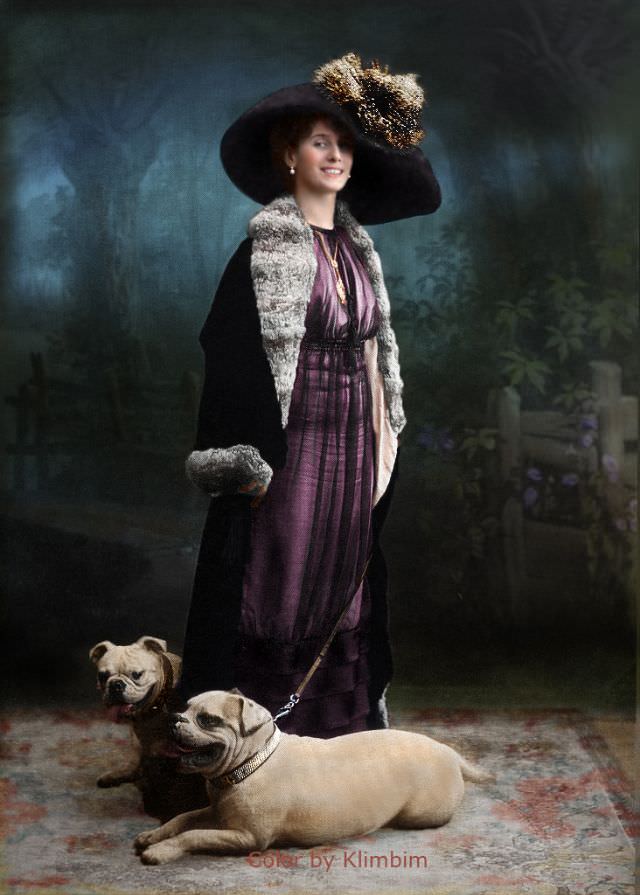
Elegance takes center stage as Anna Pavlova stands posed in a sweeping dark coat trimmed with plush fur, a wide-brimmed hat crowned with dramatic feathers, and a rich, jewel-toned dress that speaks to early 1900s fashion. The colorization brings warmth to her complexion and depth to the fabrics, turning what might have been a distant studio portrait into something immediate and intimate. Her relaxed smile suggests a moment between performances, when celebrity feels less like spectacle and more like a lived life.
At her feet, two sturdy dogs lounge and sit close by, one stretched out comfortably while the other watches from behind, their presence grounding the scene with a note of everyday companionship. The leash and collar details, made clearer through the added color, hint at the care and pride people invested in their pets during this era. Against the softly painted studio backdrop, the contrast between theatrical attire and calm animals creates a charming balance—poise above, contentment below.
Within the world of ballet history, images like this offer more than glamour; they reveal how a celebrated artist chose to be seen offstage. Pavlova’s wardrobe and posture reflect the public persona of refinement, yet the dogs introduce a gentle, personal counterpoint that modern viewers instantly recognize. For readers searching for Anna Pavlova photos, early 1900s portraits, or restored and colorized historical images, this post highlights the human side of an icon—styled for the camera, but accompanied by loyal friends.