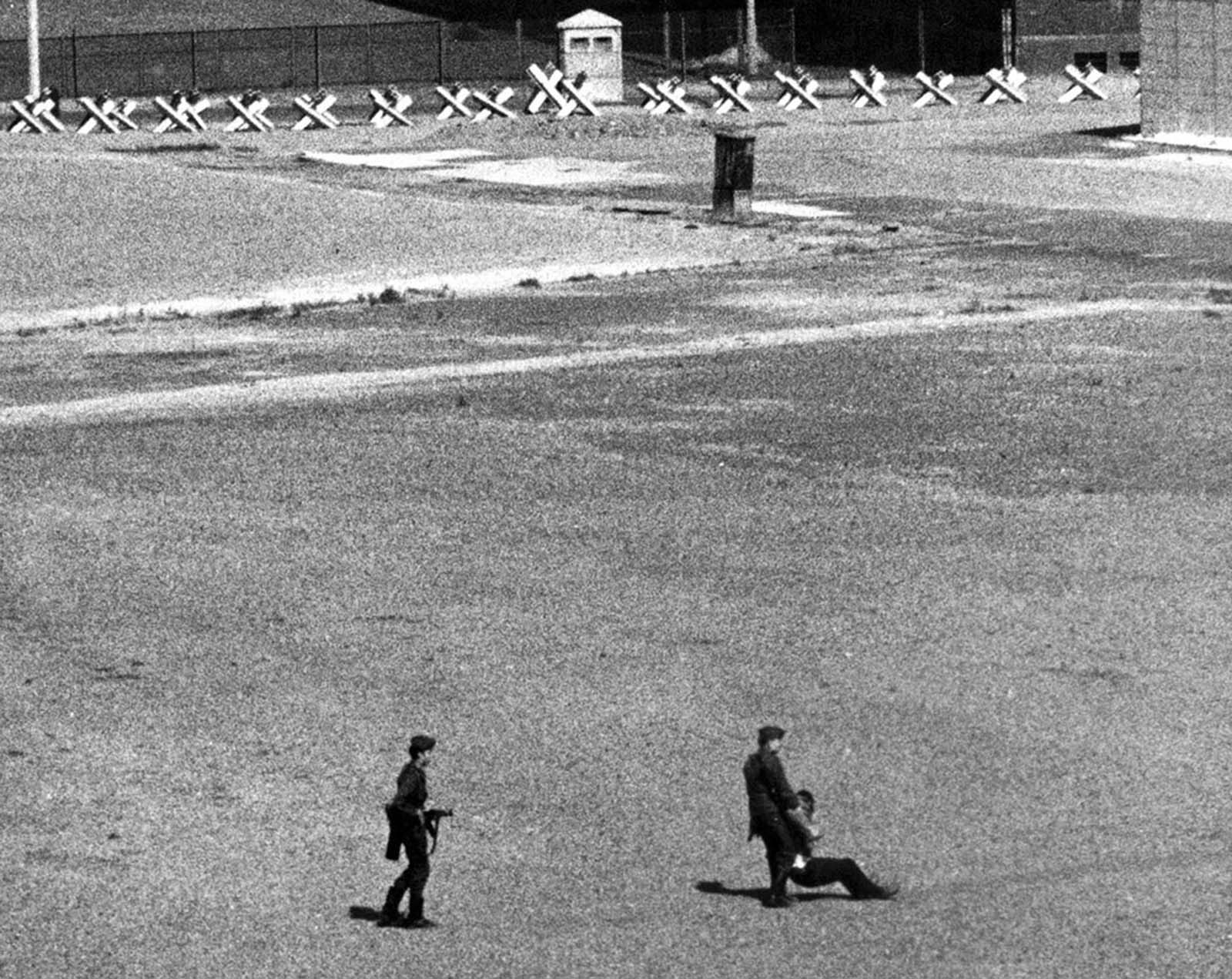
Far out on an exposed strip of ground, two East German border guards dominate the frame as they drag a wounded man away, his body slumped and legs trailing behind. The distance of the shot makes the scene feel both clinical and chilling, as if the vast emptiness of the border zone itself has been turned into a weapon. In the background, obstacles and a watch post underline what the title makes explicit: this was a failed dash through Communist border installations toward the Berlin Wall in 1971, stopped by machine-gun fire.
Across Cold War Berlin, the Wall was never just concrete; it was a layered system of fences, open “death strip” terrain, patrols, and anti-vehicle barriers designed to deny speed, cover, and second chances. The photograph’s wide composition emphasizes that design—an engineered landscape where a human being can be isolated in seconds, visible from afar, and controlled by force. Even without close-up detail, the posture of the captive figure and the guards’ practiced movements tell a story of urgency, punishment, and the grim routines of border enforcement in East Germany.
Stories like this complicate easy labels such as “civil wars,” because the conflict here plays out within a divided city and within a single people, split by ideology, alliances, and law. For readers searching Berlin Wall history, East German border guards, Cold War escape attempts, or 1971 refugee crises, the image offers a stark entry point: one individual’s bid for freedom colliding with a state’s determination to keep its citizens in. It leaves the lingering question that so many Berlin Wall photographs raise—how many moments like this unfolded in silence, beyond the reach of cameras, across that carefully guarded line.