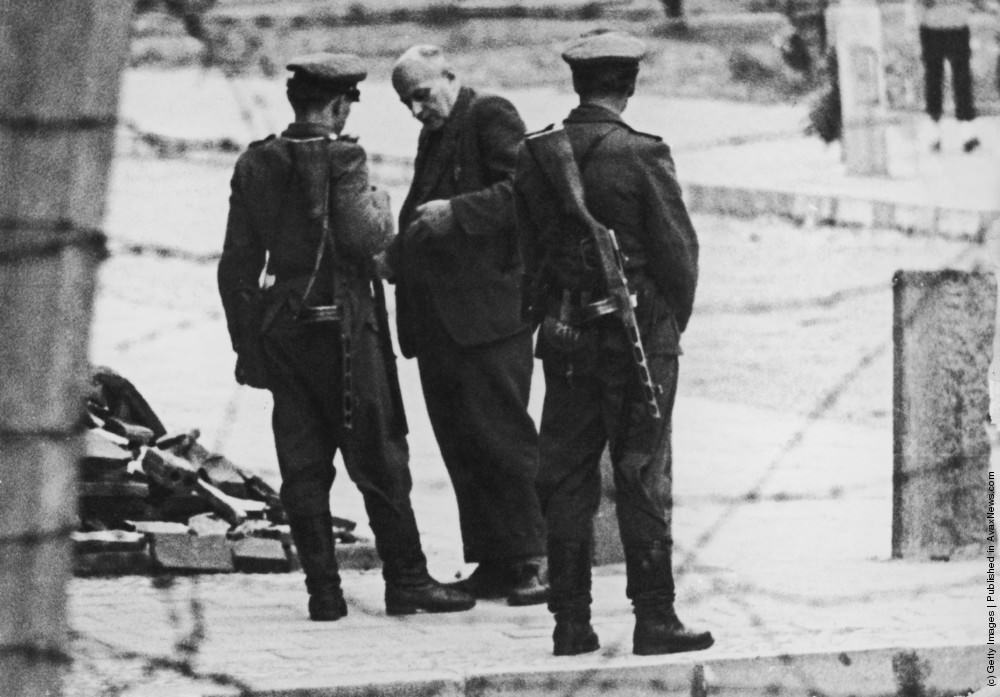
On 11th September 1961, the routines of control and suspicion that defined the early Berlin Wall are distilled into a small, tense encounter: Members of the Volkspolizei stand close as an elderly man searches for his papers. Their uniforms and slung weapons dominate the frame, turning an everyday document check into a visible assertion of state power. The man’s lowered head and guarded posture suggest how quickly ordinary movement could become an interrogation in a newly divided city.
Behind them, the street feels stripped and provisional, with rubble and rough barriers hinting at hurried construction and disrupted lives. The sparse setting emphasizes how the border was not only a line on a map but a lived environment—improvised, surveilled, and constantly enforced. Even without showing crowds or dramatic action, the photograph conveys the atmosphere of the Cold War: quiet, coercive, and relentlessly bureaucratic.
Seen today, this moment helps explain why the Berlin Wall became such a potent symbol of East Germany’s border regime and the broader struggle over freedom of movement. Checks like this were the frontline of a system that relied on paperwork, uniforms, and intimidation to regulate who belonged where. For readers exploring Berlin Wall history, East German police, and the human experience of division in 1961, the image offers a stark reminder that political conflict often arrives through small, personal encounters on the pavement.