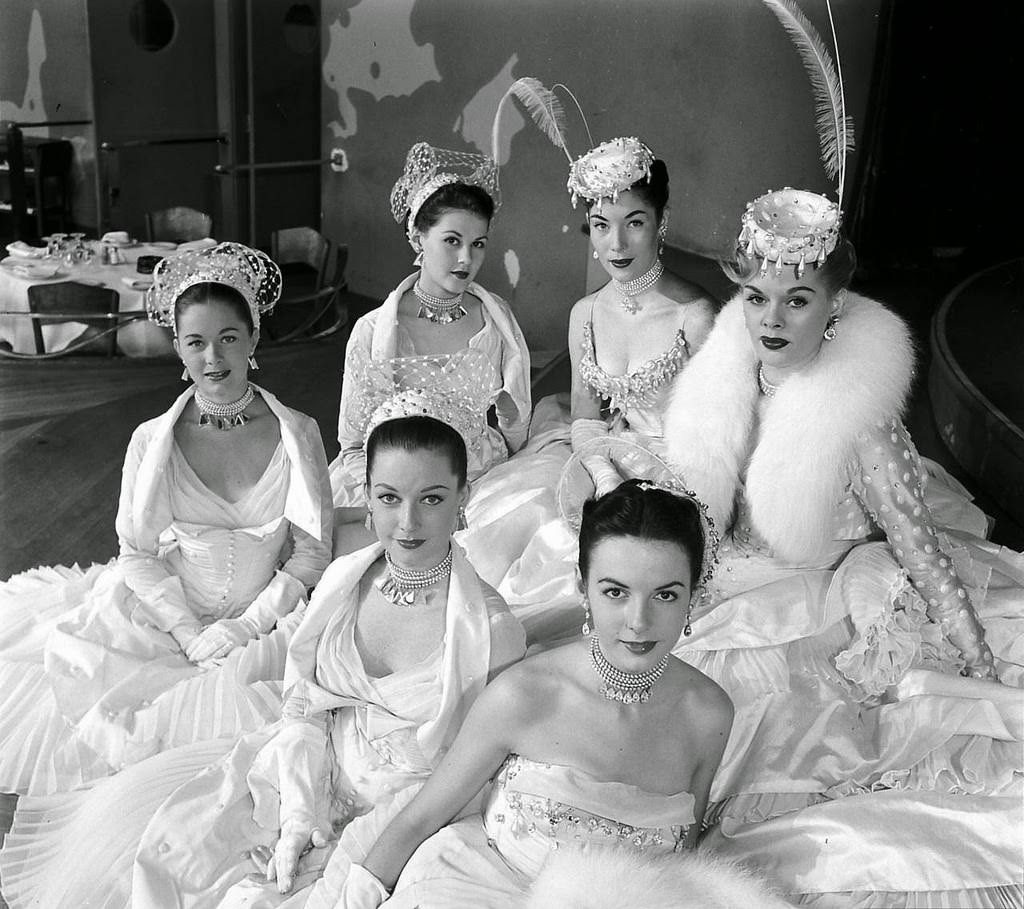
Satin, sequins, and a practiced poise define this behind-the-scenes moment with the Riviera chorus girls in Las Vegas, 1952. Five performers sit close together in show-ready gowns, their jeweled headpieces and feathered accents catching the light like stage spotlights. Pearls at the throat and carefully set hair suggest the era’s ideal of polished glamour—an elegance that looks effortless precisely because it wasn’t.
A lounge-like interior peeks out around them: tables laid with glassware, chairs pushed back, and a painted wall that hints at a themed nightclub setting. The contrast is striking—public luxury in the background, private concentration in the foreground—where the work of presenting “glitter” becomes visible in the calm between numbers. Their direct gazes feel composed rather than candid, as if the camera has been granted a brief, respectful pause inside the machinery of Las Vegas entertainment.
Fashion historians will notice how mid-century stage costume borrows from bridal silhouettes and high society evening wear, amplified for spectacle with sparkle, plume, and fur. For readers searching vintage Las Vegas, chorus line culture, or 1950s showgirl style, the photograph offers a rare texture: not the neon myth, but the human scale of performance. It’s a reminder that the Riviera era was built as much on discipline and teamwork as on dazzling lights.