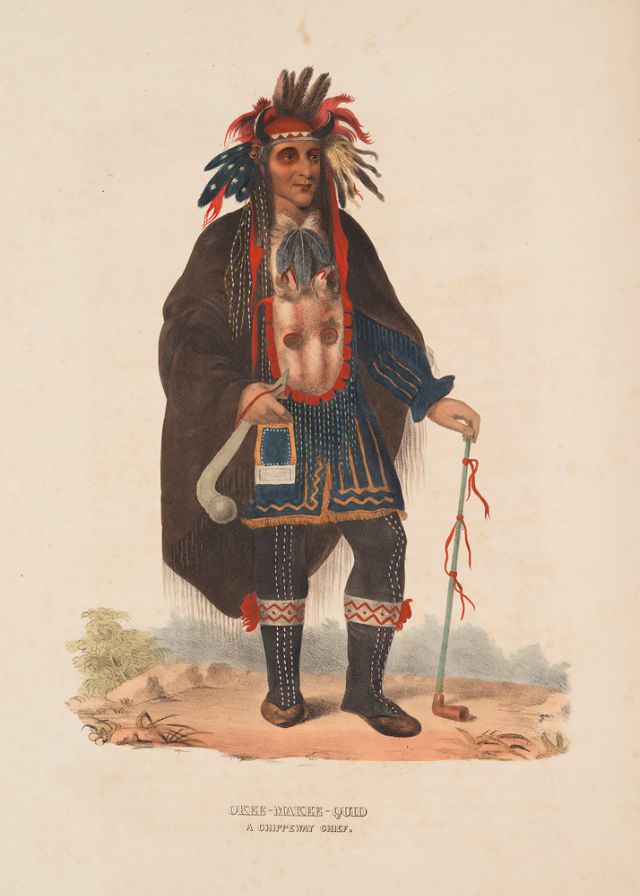
Okee-Makee-Quid stands in full regalia, presented as a Chippeway chief in a carefully rendered portrait that reads as both artwork and record. The figure’s calm, direct gaze is framed by a feathered headdress with bold red accents, while a dark cloak falls heavily over the shoulders, emphasizing the formality of the pose. Intricate beadwork and patterned leggings draw the eye downward, inviting close attention to the maker’s detail and the sitter’s status.
Held at the front is a striking animal-faced adornment—likely a mask or headdress element—its pale surface contrasting with the rich blues and reds of the clothing. In the other hand, a slender staff rests against the ground, suggesting leadership, ceremony, or a posed studio-like convention translated into illustration. The mostly blank background isolates the subject, a common choice in period portraits that turns clothing, tools, and posture into the primary “text” for viewers to read.
For readers searching Native American history imagery, Chippewa (Ojibwe) leadership portraits, or early ethnographic-style prints, this piece offers a vivid window into how Indigenous identity was depicted and circulated in art. The captioned title, “Okee-Makee-Quid, A Chippeway Chief,” anchors the work while leaving modern audiences to consider what is being documented, what is being interpreted, and what may be missing beyond the frame. As a WordPress feature image, it pairs well with discussions of historic illustration, material culture, and the enduring power of portraiture in shaping public memory.