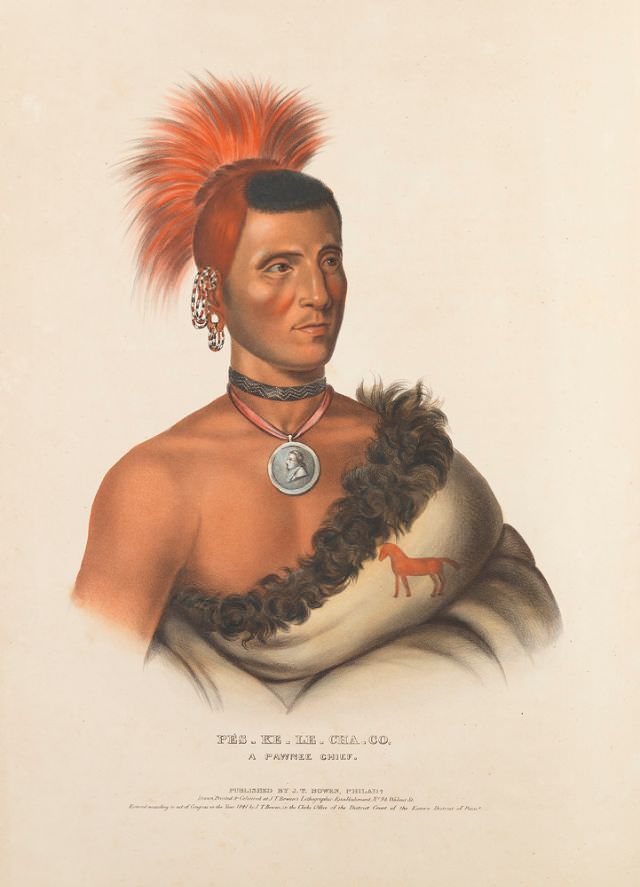
Rendered with the careful polish of a studio portrait, this artwork introduces Pes-Ke-Le-Cha-Co, identified in the title as a Pawnee chief, and invites a closer look at how Indigenous leaders were presented to wider audiences. The figure’s calm, forward gaze and composed posture lend the image a sense of dignity, while the open, pale background keeps all attention on face, regalia, and gesture. As a historical print, it sits at the crossroads of documentation and interpretation—part record, part crafted visual statement.
Color and ornament do much of the storytelling here: a vivid feathered crest rises above closely cropped hair, brightening the portrait with striking reds and warm tones. Large earrings and a layered neckband frame a prominent medallion, and a fur-trimmed robe drapes across the shoulder, marked with a small painted animal motif that reads as deliberate symbolism rather than mere decoration. The smooth modeling of the skin and the finely described textures—feather, fur, metal—underscore the artist’s intent to communicate status, identity, and presence through material detail.
For readers searching for Pes-Ke-Le-Cha-Co, Pawnee history, or Native American portrait prints, this piece offers a compelling window into the visual culture of its era and the ways leadership was communicated through dress and adornment. It also prompts reflection on the historical circumstances behind such portraits—who commissioned them, how they circulated, and what they emphasized or omitted. Whether approached as art, archive, or cultural artifact, the portrait remains an engaging entry point for understanding representation and memory in the historical record.