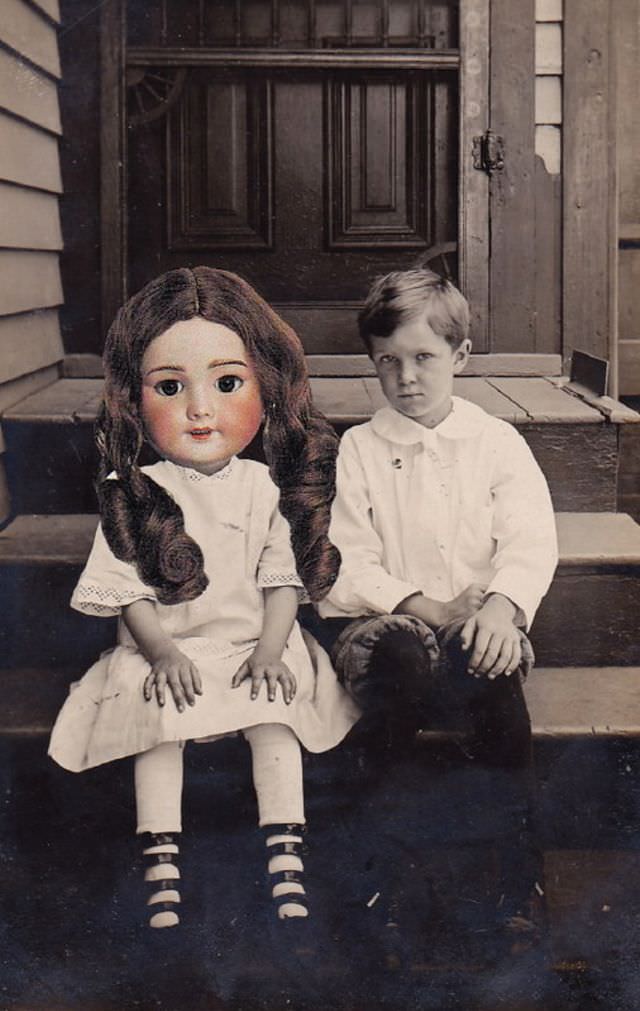
At the foot of a porch staircase, a young boy in a crisp light shirt sits beside a “sister” who looks uncannily like a porcelain doll brought to life. Her oversized glassy eyes, painted cheeks, and carefully styled curls contrast with the boy’s steady, slightly guarded stare, creating a scene that feels both domestic and unsettling. The wooden door and siding behind them anchor the moment in everyday home life, while the carefully posed arrangement hints at the pride families once took in formal snapshots.
The title, “Henry’s sister was a living doll,” reads like a mischievous family caption, and the photograph leans into that ambiguity with theatrical flair. Whether it’s a child in costume, an artfully altered print, or a staged illusion meant to amuse, the effect is the same: a playful blur between childhood, doll-making aesthetics, and early photo manipulation. Details like the matching seated posture, the neat dress and stockings, and the symmetry of the steps heighten the sense that this was composed with intent rather than captured by accident.
As an artwork as much as a portrait, this image invites modern viewers to linger on the odd tenderness of the tableau—part sibling story, part visual prank. It’s the kind of vintage curiosity that fits perfectly in collections of antique photographs, uncanny Americana, and historical family portraits that don’t quite behave. For anyone searching for unusual old photos, “living doll” imagery, or the eerie charm of early portrait traditions, this post offers a small mystery with a memorable face at its center.