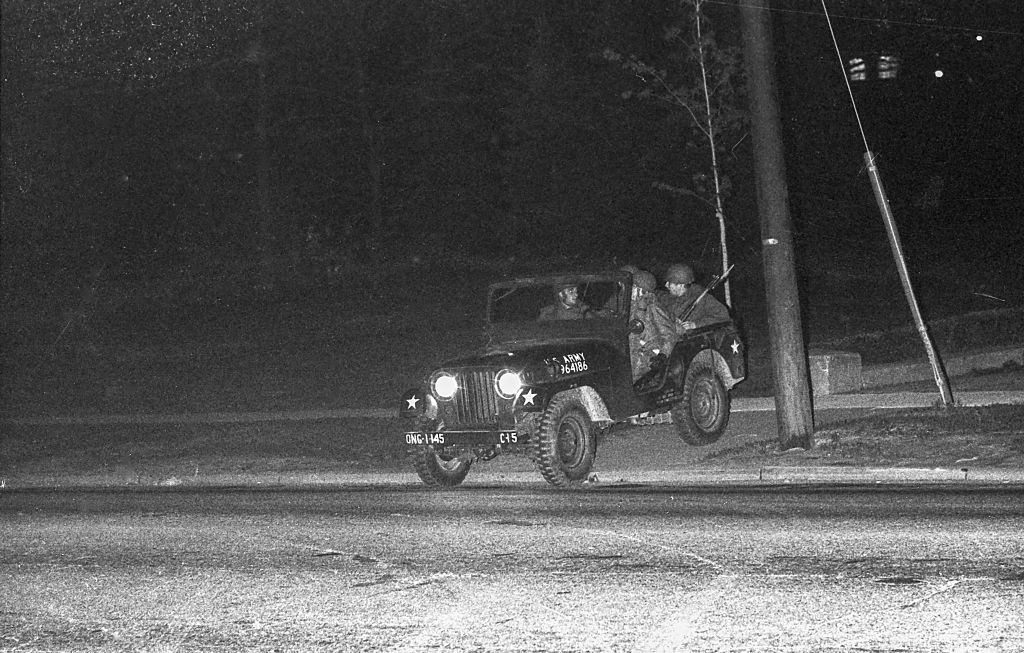
Headlights cut through the darkness as an Army-style jeep rolls along the edge of the Kent State University campus in Kent, Ohio, carrying Ohio National Guardsmen tasked with enforcing a curfew on May 3, 1970. The grainy night scene, with a lone utility pole and the empty roadway, underscores how quickly a familiar college setting could be transformed into a monitored zone. Even without the daytime crowds, the military vehicle’s markings and the alert posture of the men inside signal the gravity of the moment.
Taken in the shadow of the Vietnam War era, the photograph points to the broader tension between student protest, public order, and state authority that defined many American campuses in 1970. A curfew is, by nature, a quieting measure—meant to empty streets and keep movement predictable—yet the very presence of armed forces in a university environment conveys unease. Night patrols like this one became part of the atmosphere as officials sought to control escalating unrest.
For readers looking into Kent State history, Ohio National Guard deployment, or the escalating conflicts of the Vietnam War home front, this image offers a stark, street-level perspective. It captures the logistical reality of enforcement—vehicles, patrols, and watchfulness—rather than speeches or banners, and that everyday machinery of crisis is what makes the scene so chilling. The stillness of the campus road hints at what everyone in town likely understood: something serious was unfolding, and the next day would carry consequences.