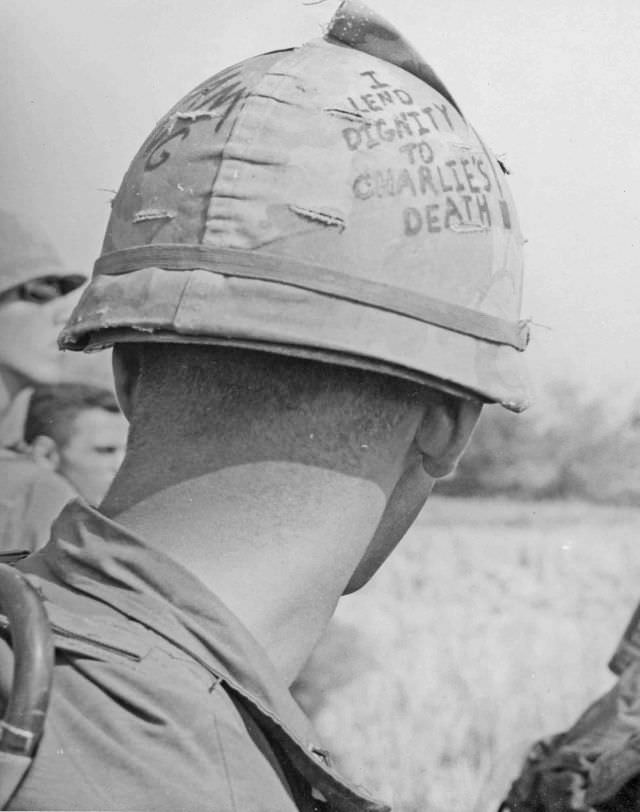
Painted across the back of a combat helmet, the words “I LEND DIGNITY TO CHARLIE’S DEATH” turn a soldier’s gear into a blunt, unsettling statement. Shot from behind, the frame lingers on the nape of the neck, the scuffed metal, and the hand-lettered message—details that make the Vietnam War feel immediate and human rather than abstract. The field and distant figures soften into the background, as if the landscape itself has learned to keep its distance from what the inscription implies.
In the slang of the conflict, “Charlie” was a catchall for the Viet Cong, and the phrase reads like dark bravado wrapped around fatigue. Graffiti like this mattered: it was a private outlet made public, a way to claim control over fear, grief, and routine violence when official language offered only mission talk and body counts. The helmet becomes a moving billboard of wartime psychology, where humor, menace, and resignation can occupy the same line of paint.
Behind the SEO-friendly tags—Vietnam War photo, soldier helmet, combat inscription—sits a harder question about how people survive the moral weight of war. The photographer doesn’t need to show a battle to evoke one; the message alone carries the echo of patrols, ambushes, and the relentless division of “us” and “them.” For readers today, this historical image preserves not just a moment, but a mindset, inviting reflection on the language soldiers used to navigate death and dignity in a conflict that still refuses easy summaries.