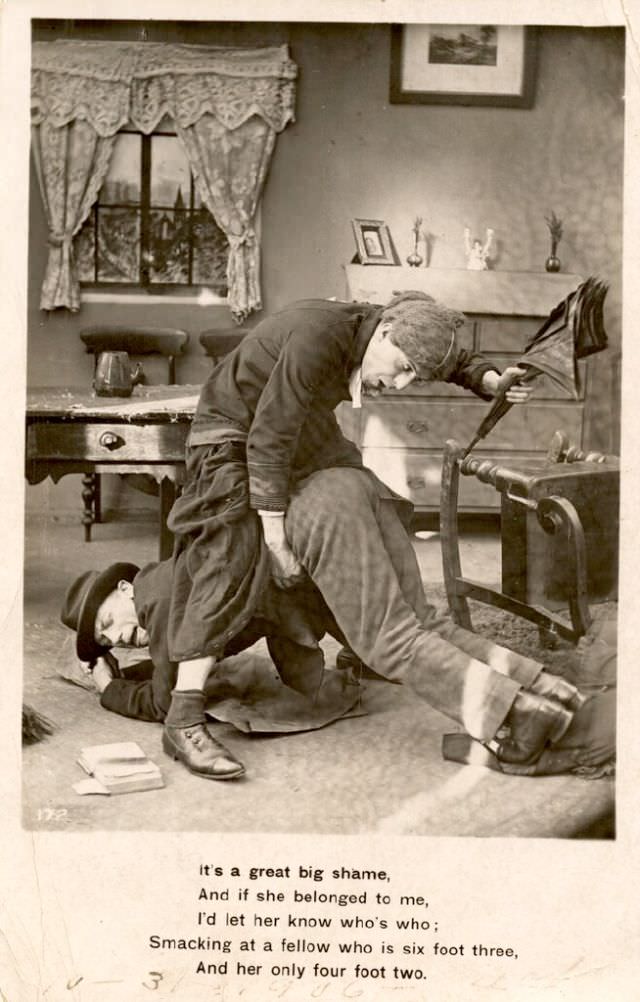
Trouble has toppled right into the parlor: a lanky man sprawls on the floor while a woman, steady on her feet, seems to have won the moment—one hand gripping a folded umbrella as if it’s both prop and punctuation. Around them, the everyday room details stay stubbornly calm: a lace-curtained window, a sturdy table, framed wall art, and a chair pushed just off-kilter, all underscoring the comic contrast between domestic order and sudden slapstick chaos.
Beneath the scene, the printed verse gives the title “It’s a great big shame” its bite, playing up the mismatch in size and the audacity of “smacking” a “fellow who is six foot three” by someone “only four foot two.” That sing-song rhyme, paired with the staged tumble, points to a period taste for humorous moralizing—part cautionary, part flirtation, and part joke about gender roles turned upside down in a space usually associated with manners and restraint.
Look closer and you can almost hear the creak of floorboards and the gasp before the laugh, the kind of theatrical moment that would have felt at home on a postcard or in a cabinet photo meant to be shared. For readers hunting vintage comedy, early domestic interiors, or umbrella-as-weapon sight gags, this historical photo delivers a memorable mix of storytelling and set design—proof that long before memes, people were already staging punchlines for the camera.