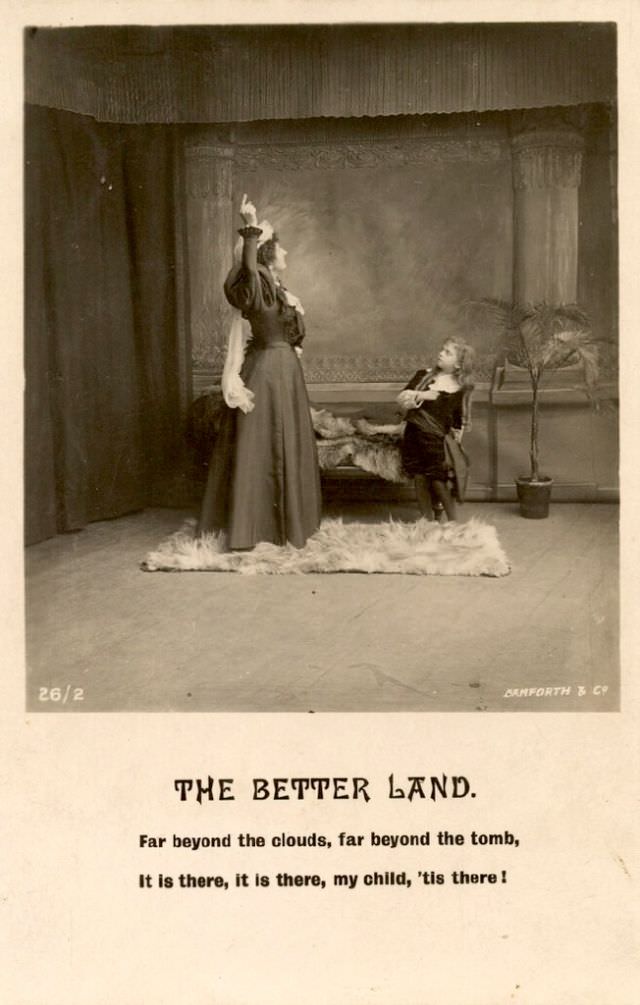
Stagecraft and sentiment meet in this striking period scene titled “The better land,” where a robed figure lifts an arm toward an unseen sky while a small child, half-perched and half-kneeling, looks up in rapt attention. Heavy curtains frame the set like a proscenium, and a simple bench, a potted palm, and a pale rug suggest a parlor transformed into something symbolic. Theatrical poses and carefully arranged props hint that this is less a candid moment than a staged tableau meant to be read like a story.
Beneath the photograph, the printed verse—“Far beyond the clouds, far beyond the tomb…”—guides the viewer toward a comforting, otherworldly promise, turning the domestic interior into a doorway for imagination and belief. The contrast between the adult’s upward gesture and the child’s questioning gaze creates a gentle tension: instruction and wonder, certainty and curiosity. Even the sparse backdrop, painted to feel expansive, reinforces the idea of “better land” as a destination just out of reach yet vividly invoked.
As a historical photo, it offers a fascinating glimpse into how earlier audiences encountered big themes—grief, hope, the afterlife—through performance, photography, and printed text working together. The image reads like a moral vignette or a stage still, the kind of visual storytelling once shared in albums and parlors as readily as it might be recited aloud. For collectors and history-minded readers, “The better land” is a memorable example of vintage theatrical photography and the era’s taste for earnest, slightly humorous melodrama.