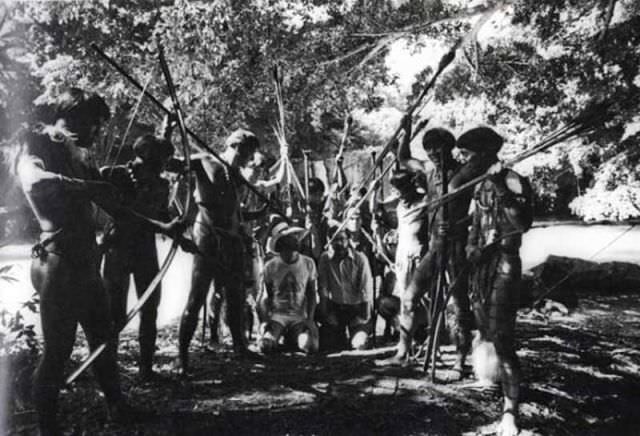
Tension hangs in the shaded clearing as a ring of armed men closes in, long spears and bows angled toward the center. Several figures kneel on the ground, surrounded on all sides, while others stand shoulder to shoulder beneath a canopy of trees that breaks the light into hard, dramatic contrasts. The scene feels staged for maximum suspense—an ambush frozen mid-breath—matching the ominous promise of the title, “The Hovitos turn on the crew.”
Costuming and props lean into a classic adventure-film vocabulary: minimal clothing, headbands, and an emphasis on traditional weapons meant to signal danger and unfamiliar territory. The group’s posture tells the story as much as the weapons do—guards poised with raised spears, captives lowered and contained—creating a clear power imbalance without needing dialogue. In the background, bright open space beyond the trees hints at a riverbank or lakeside edge, an isolated setting that heightens the sense of vulnerability for the crew at the center.
For fans of Movies & TV history, this kind of production still offers a snapshot of how earlier screen narratives staged “turning point” moments—betrayal, capture, and the sudden collapse of uneasy alliances. The composition is built like a set piece, inviting viewers to imagine the seconds before the first command is shouted or the first strike is made. Whether you’re cataloging vintage film photos or exploring the tropes of jungle adventure storytelling, this image is a compelling artifact of on-screen peril and spectacle.