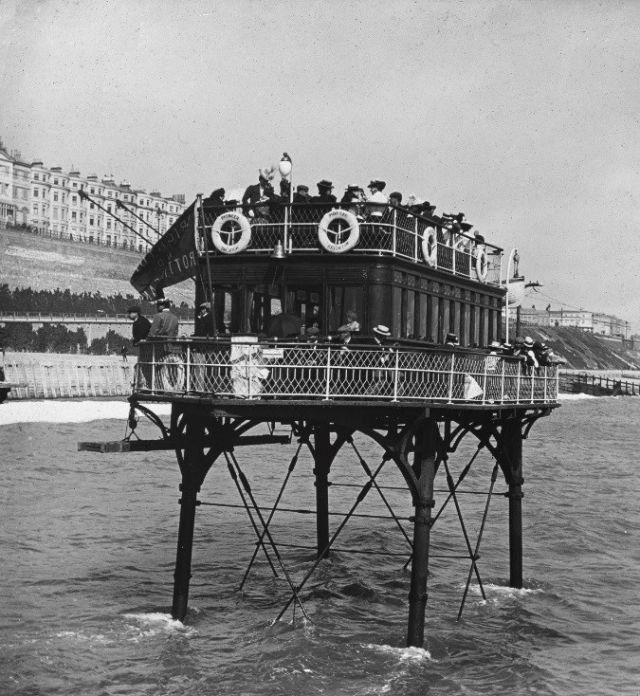
Perched above the choppy seaside on spindly metal legs, the “Daddy Long-Legs” railway car looks more like a pier-top pavilion than a train. Passengers crowd the open upper deck while others peer through the windows below, and lifebuoys hang along the railings as a practical reminder that this was public transport skimming the edge of the sea. Along the shoreline behind it, rows of buildings and a curving promenade frame the scene, grounding this strange contraption in a familiar British resort setting.
Unlike ordinary coastal trains that hug solid ground, Brighton’s peculiar electric railway ventured out over the water, rolling on a track laid beneath the carriage and supported by those tall, skeletal supports. The engineering is written all over the photograph: riveted beams, bracing struts, and a body built high enough to clear waves and tide. It’s an invention-era solution to a seaside problem—how to connect points along the coast when the shore itself is busy, changeable, and exposed.
Curiosity is part of the appeal today, and it’s easy to see why this 1896 experiment has become a staple of “weird but interesting” transport history. The image captures the optimism of early electric travel, when novelty was a selling point and a day out could include riding a machine that looked half tram, half boat, and entirely unlike anything else. For readers searching Brighton history, unusual railways, or Victorian-era inventions, the Daddy Long-Legs remains a memorable reminder that progress sometimes arrived on stilts.