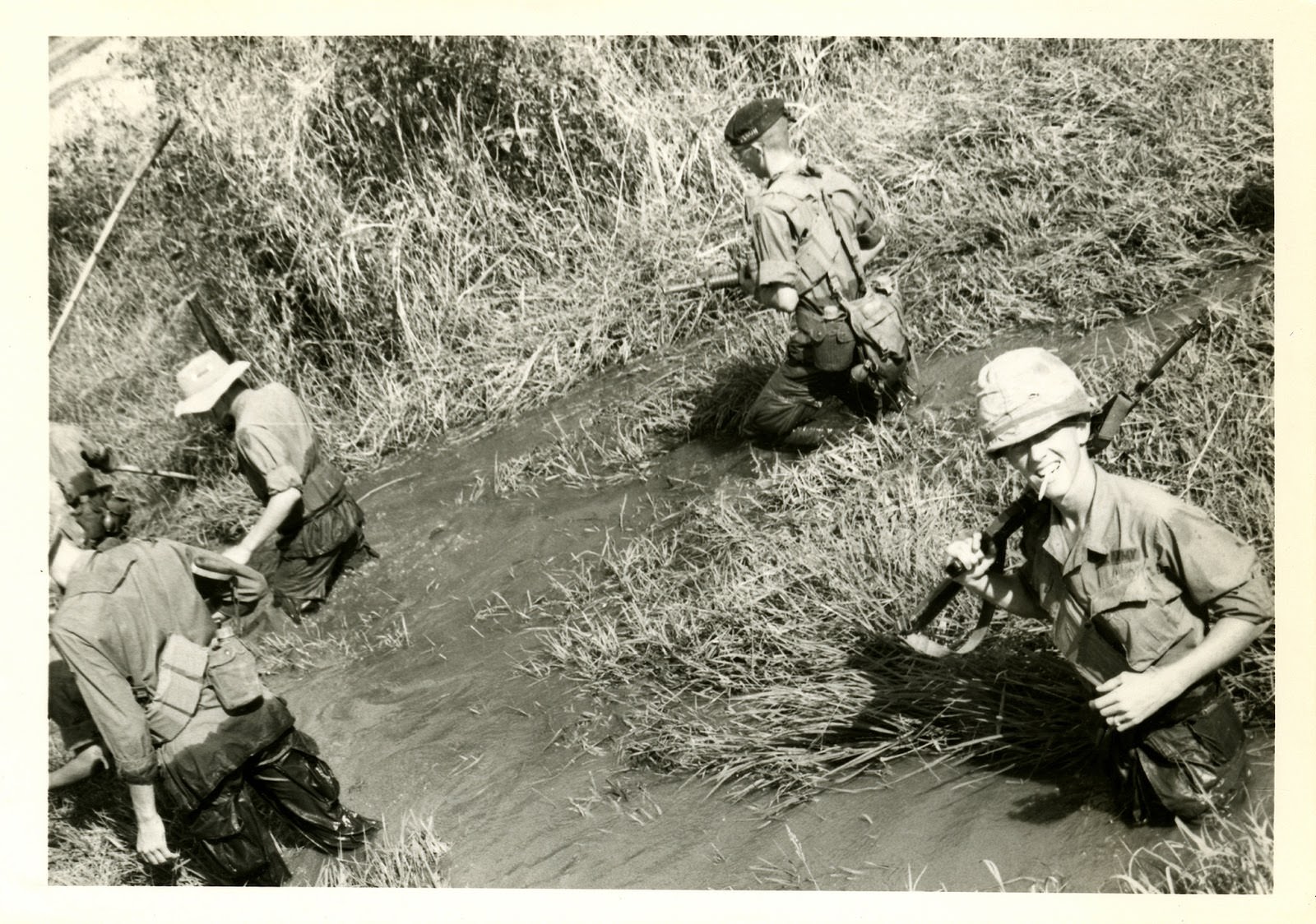
Muddy water cuts a narrow channel through high grass near Cambodia’s Memot District, and a small group of soldiers moves through it one cautious step at a time. Packs ride high on their backs, rifles are kept close, and the men brace themselves against the pull of the stream and the snag of reeds. The scene feels both ordinary and precarious—fieldcraft reduced to balance, footing, and vigilance.
May 1970 places this moment in the tense expansion of the Vietnam War into Cambodia, when border provinces and rural waterways became contested corridors. The landscape here offers little shelter beyond brush and uneven banks, forcing patrols to work with what the ground allows. Details like rolled sleeves, wet trousers, and the improvised rhythm of a crossing hint at heat, fatigue, and the constant need to stay ready.
For readers searching Vietnam War history and the Cambodia campaign, the photo is a vivid reminder that large strategies often played out in small, uncomfortable places. A brief smile toward the camera contrasts with the serious purpose of the patrol, capturing how soldiers could perform normality even while moving through risk. It’s an unvarnished glimpse of movement and terrain—where a simple creek becomes part of a wider conflict.