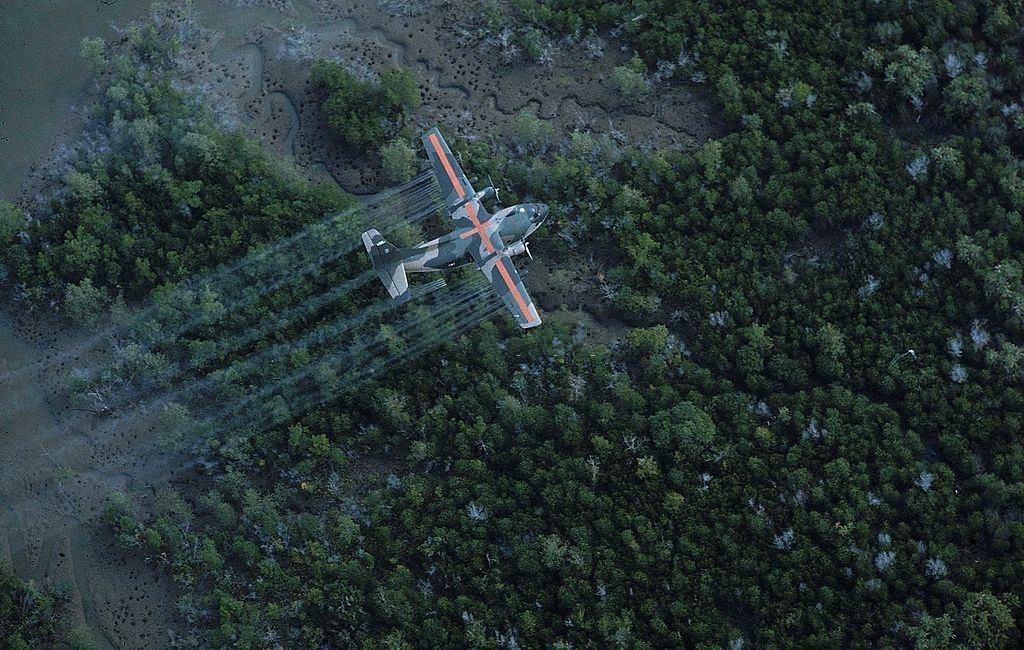
A twin‑engine USAF UC‑123K cuts low over a dense patchwork of Vietnam’s greenery, its broad wings marked by high‑visibility stripes as spray booms release long, pale plumes behind the aircraft. From this oblique, aerial vantage, the defoliant stream reads like a deliberate brushstroke laid across the canopy, following the plane’s steady line as it passes over marshy ground and clustered trees. The scene is quiet in appearance, yet charged with purpose—an operation designed to alter the landscape itself.
During the Vietnam War, Agent Orange and other herbicides were used as a defensive measure to strip away vegetation that could conceal movement along roads, rivers, and perimeter areas. The UC‑123K, adapted for chemical dispersal, became an emblem of aerial defoliation campaigns: practical, repetitive sorties intended to deny cover and visibility to opposing forces. What looks like a thin haze in the wake of the aircraft represents a much larger strategy of environmental warfare, where the battlefield included forests, mangroves, and farmland.
The title’s reference to dioxin contamination underscores why images like this remain central to discussions of Agent Orange’s legacy. Beyond the immediate military calculus, the defoliation program has been linked to enduring ecological damage and long‑term health consequences for those exposed, making the photograph a stark entry point into the contested history of Vietnam War tactics. For readers searching Vietnam War photos, UC‑123K aircraft, or Agent Orange spraying, this moment captures the unsettling intersection of aviation technology and chemical policy in 1970.