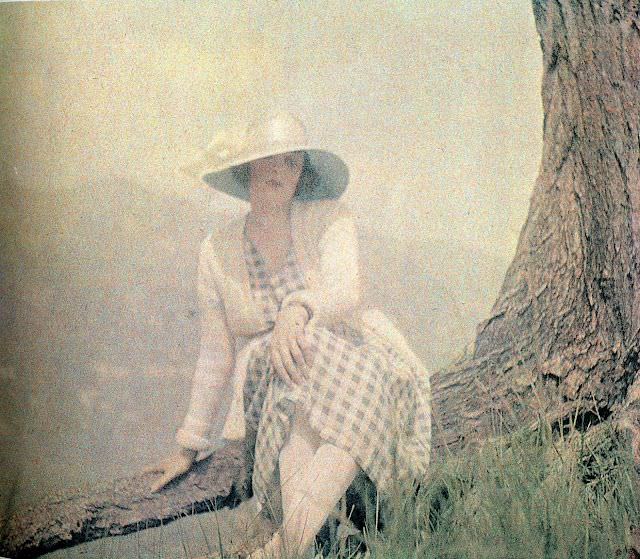
Under the broad brim of a pale hat, a Parisian woman settles into a quiet, self-possessed pose at the base of a tree, her patterned dress and light cardigan softened by the image’s delicate, hazy tones. The gentle blur and muted palette lend the portrait a dreamlike intimacy, as if the scene were caught between a summer afternoon and a fading memory. Grass gathers at the trunk, and the open background dissolves into mist, keeping attention on her relaxed elegance and unforced presence.
Rather than treating fashion as mere decoration, the photograph uses clothing and posture to suggest character: a hand resting easily on a bent knee, the other braced against the ground, a gaze that meets the camera without strain. The silhouette of the hat frames her face like a stage, yet nothing feels posed for spectacle; it’s a private moment shared, not a performance. In this kind of portrait, style becomes a language for individuality—confidence, calm, and a subtle modernity in how she occupies space.
Lartigue’s portraits are often celebrated for their chic surfaces, but images like this reveal why they endure in fashion and culture history: they preserve the spirit of women navigating a changing world with grace and agency. The soft-focus aesthetic, the outdoor setting, and the casual composure all contribute to an impression of lived life rather than studio artifice. For readers searching for Parisian style, early modern femininity, and the human side of classic portrait photography, the scene offers a gentle reminder that personality can be the most striking accessory of all.