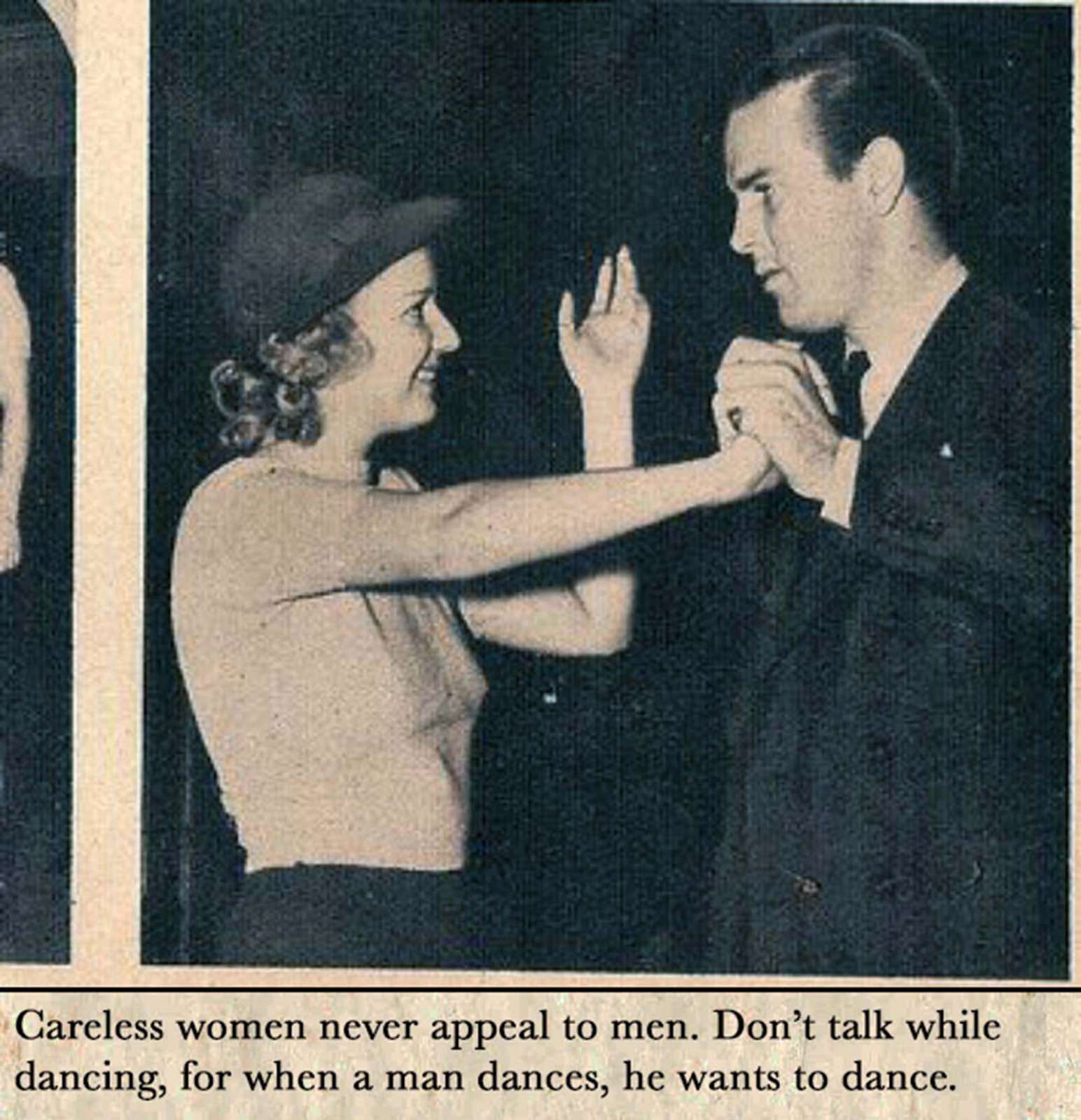
Across a dim dance floor, a young woman in a brimmed hat leans in with animated hands while her partner, dressed in a dark suit, holds her close and looks intent on the steps. The candid moment is framed like a lesson, pairing flirtation and body language with the unspoken rules of public courtship. Beneath the photo, the printed line lands like a punchline and a warning: “Careless women never appeal to men.”
The caption’s second jab—advising women not to talk while dancing because “a man dances, he wants to dance”—is a neat snapshot of old etiquette and older expectations. It treats conversation as a distraction and places the man’s preference at the center, turning a shared pastime into a one-sided standard of “proper” behavior. Read today, the humor feels sharper, revealing how easily social advice slipped into policing women’s voices and manners.
For readers who enjoy vintage humor, historical gender norms, and the social history of dating and dance culture, this image makes a lively, unsettling artifact. The photograph’s warm expressions suggest a simple night out, yet the moralizing text tries to steer what’s acceptable in the most ordinary moments. It’s a reminder that even lighthearted captions can carry the weight of their era—inviting us to laugh, then reconsider who was allowed to speak, and when.