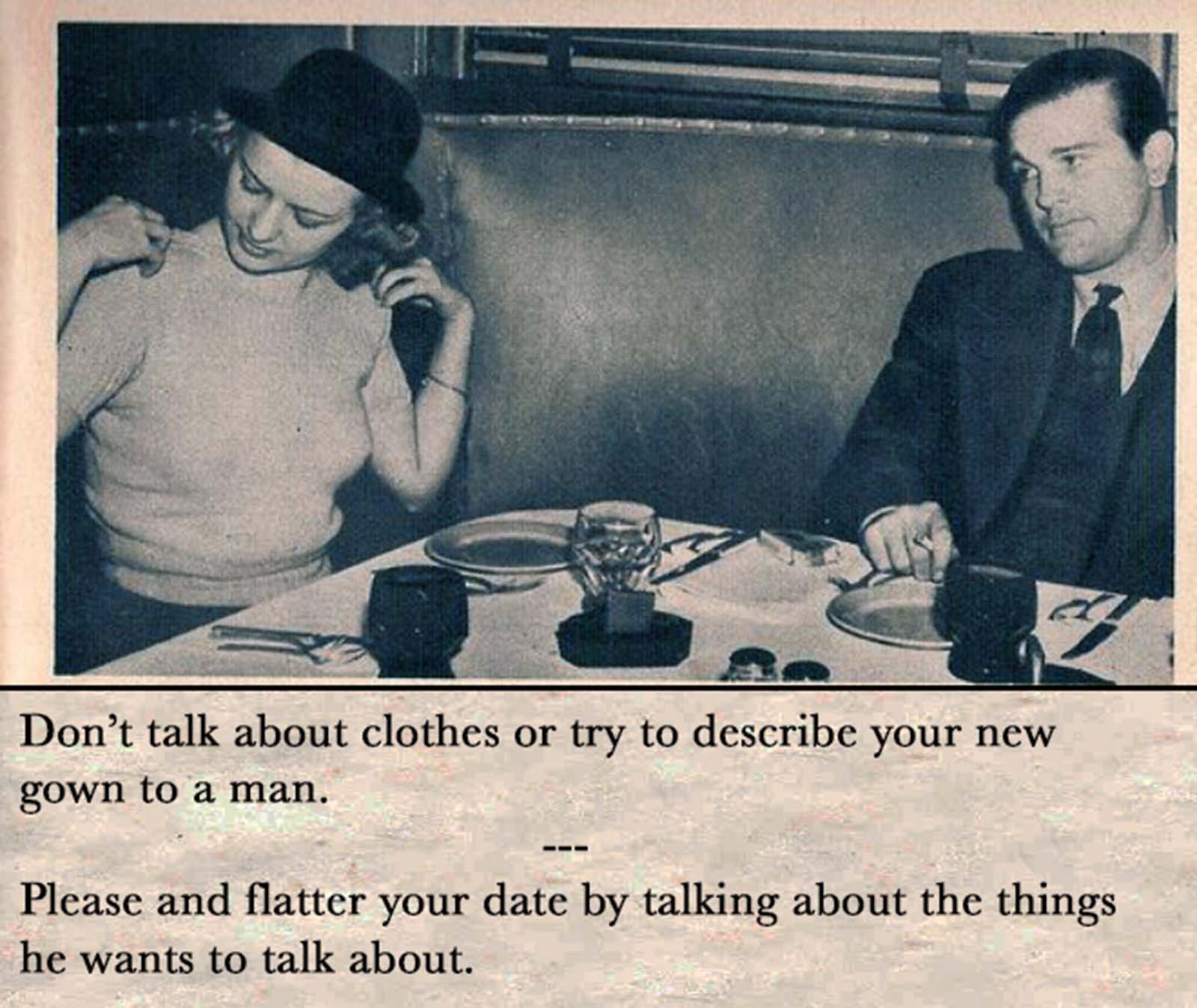
At a small restaurant table set with plates, glasses, and neatly placed cutlery, a young couple sits in a moment that feels both ordinary and carefully staged. She looks down and adjusts her outfit and hair, while he sits back with a faint, reserved expression, as if waiting for the “right” kind of conversation to begin. The composition leans into that uneasy silence many people recognize from first dates, where manners are performed and expectations hover just off-camera.
Beneath the photo, the printed advice is the real punchline: “Don’t talk about clothes or try to describe your new gown to a man.” The follow-up—encouraging a woman to “please and flatter” her date by talking about what he wants—reads today like a time capsule of mid-century dating etiquette and gender norms. It’s funny in a sharp way, not because the guidance is wise, but because it’s so blunt about who is expected to accommodate whom.
Taken together, the image and caption make a compact piece of social history, showing how romance was often framed as a performance with rules, scripts, and winners. For readers interested in vintage relationship advice, old-fashioned courtship, or the everyday politics of “polite” conversation, this post offers a revealing glimpse into how popular culture coached women to manage men’s attention. The humor lands best when you read it as both a joke and a lesson in what earlier generations were told to swallow.