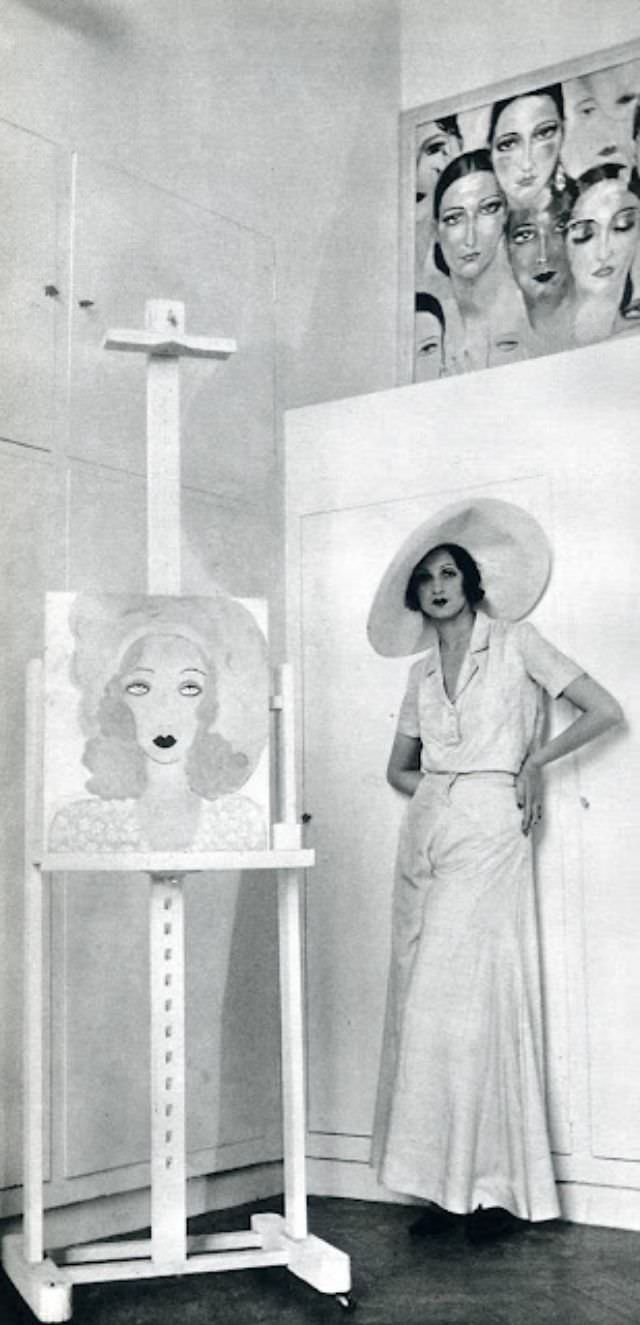
Poised beside an easel in a spare studio, a stylish woman in a wide-brimmed hat and crisp, light-colored dress turns the act of portraiture into a quiet performance. Her relaxed stance—one hand set at the hip, the other resting near the doorframe—reads as confidence rather than mere display, a lived-in elegance that feels distinctly Parisian in spirit. Even without a visible street or skyline, the atmosphere suggests the cultivated world where fashion, art, and modern identity constantly overlapped.
Painted faces hover around her like a chorus: a large canvas on the easel presents a simplified, doll-like visage, while a framed arrangement of women’s heads looks on from above. The contrast between the living sitter and the stylized portraits underscores the era’s fascination with appearance—makeup, hair, and graphic lines—while also hinting at individuality within a shared visual language. In this interplay of real and rendered, femininity becomes less a single ideal and more a spectrum of moods, angles, and self-possession.
Lartigue’s appeal, echoed by the title, lies in how glamour never fully eclipses character. The setting—bare walls, studio fixtures, and the orderly geometry of canvases—frames the subject as more than a decorative muse, aligning her with creative space and cultural agency. For readers drawn to fashion history and Parisian modernity, the photograph offers an SEO-friendly window into portrait photography, women’s style, and the intimate theater of identity that played out behind atelier doors.