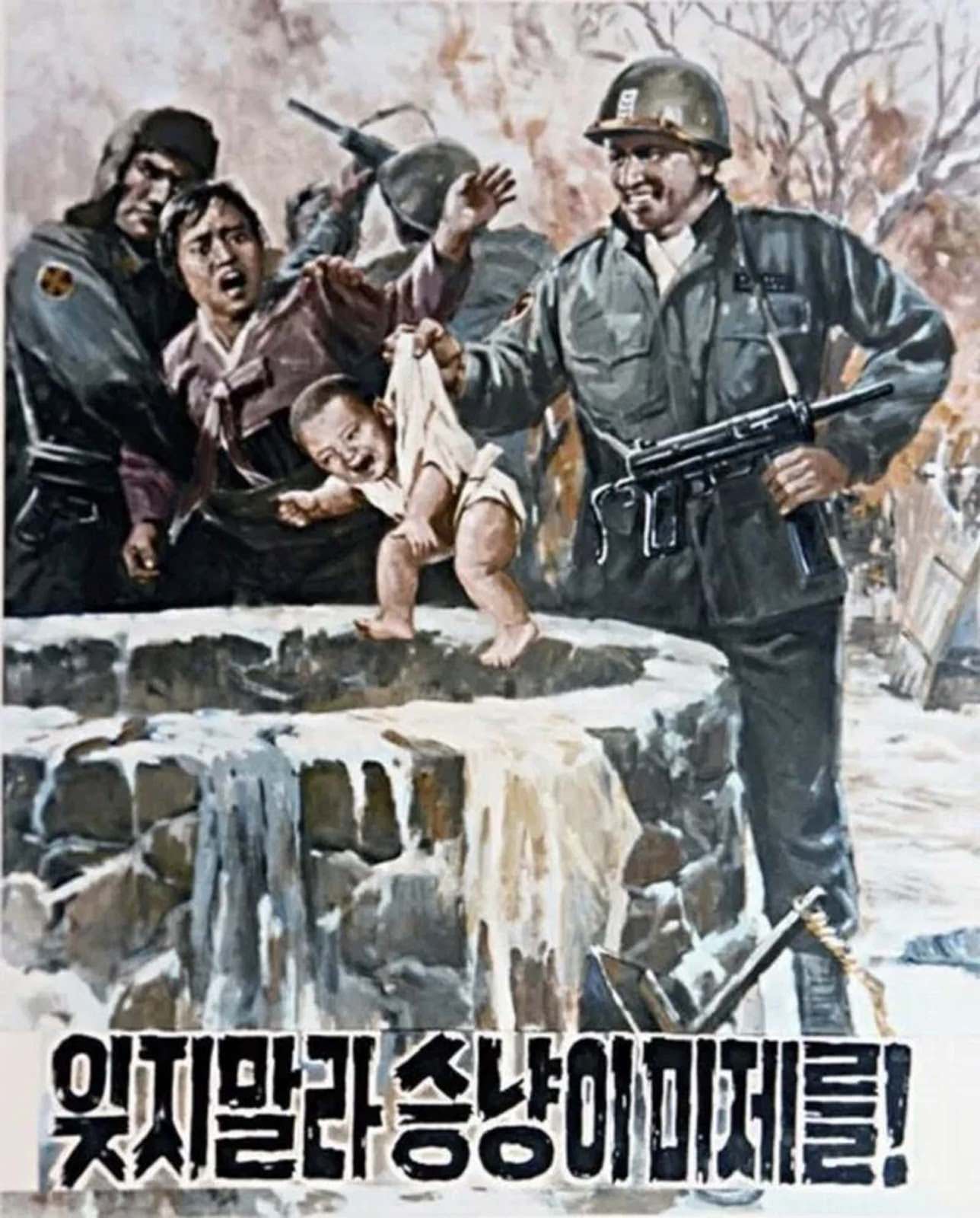
A stone-lined well dominates the scene, its rim slick with streaks that look like frozen runoff, while a baby is held by the fabric of a tiny shirt and dangled above the dark opening. The child’s legs kick and the face contorts in alarm, a visceral focal point that makes the viewer feel the drop. Behind the well, winter-bare branches and smoky, painterly brushwork suggest cold air and chaos closing in.
On the right, a helmeted soldier grips a submachine gun and wears a grim, almost performative smile, turning the moment into a tableau of intimidation rather than rescue. To the left, another armed figure restrains an adult who appears to be pleading, one arm raised as if to shield the child or beg for mercy. The contrast between the baby’s vulnerability and the hard lines of military gear gives the image the charged tone of wartime propaganda art.
Bold Korean text spans the bottom like a shouted caption, reinforcing the poster-like design and signaling that this is an artwork meant to persuade as much as depict. Even without a named place or date visible, the composition points to a broader story of conflict, fear, and the weaponization of family imagery. For readers searching for historical posters, Korean propaganda, or wartime illustration, this post offers a stark example of how a single shocking scene can be crafted to carry political meaning.