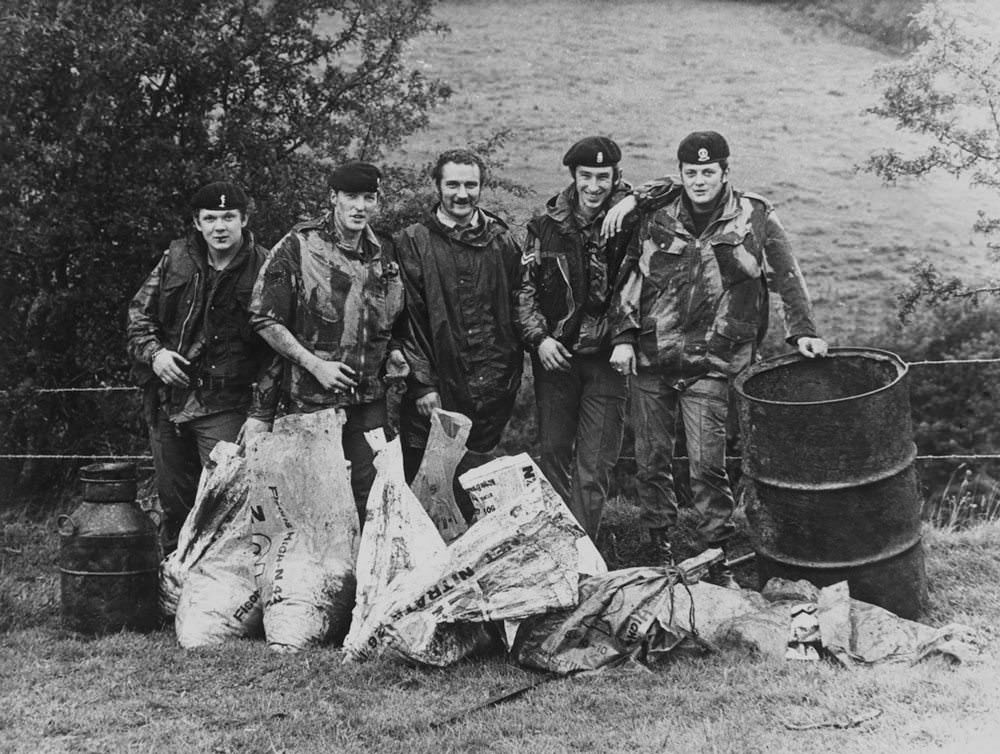
Five uniformed members of the 321 Explosive Ordnance Disposal Company, Royal Army Ordnance Corps, stand together outdoors in Omagh, framed by wet ground and heavy foliage, their posture relaxed in the aftermath of danger. Mud-splashed jackets and berets hint at field conditions rather than parade-ground ceremony, while a faint smile here and there suggests the release that follows a high-risk task completed safely. The group’s closeness reads as professional trust forged in work that allowed little margin for error.
In the foreground, the materials that made the incident so perilous are laid out like evidence: sacks associated with ammonium nitrate and other debris gathered into a rough pile. Nearby sit a large metal drum and container, objects that underscore the improvised, industrial character typical of many devices built from everyday supplies. The title’s reference to a defused 660lbs ammonium nitrate bomb places this scene squarely in the grim practicalities of bomb disposal, where scale and common chemicals could combine into catastrophic potential.
Omagh in 1974 belongs to a wider Northern Ireland story in which roadsides, fields, and towns became contested spaces, and EOD teams were drawn into an unrelenting cycle of threat and response. Photographs like this are valuable not only for what they show—kit, conditions, and the tangible components of a device—but for what they imply about routine courage and technical skill under pressure. For readers searching terms like Royal Army Ordnance Corps, 321 EOD Company, Omagh 1974, or ammonium nitrate bomb, this image anchors history in the faces and work of the soldiers tasked with preventing the next explosion.