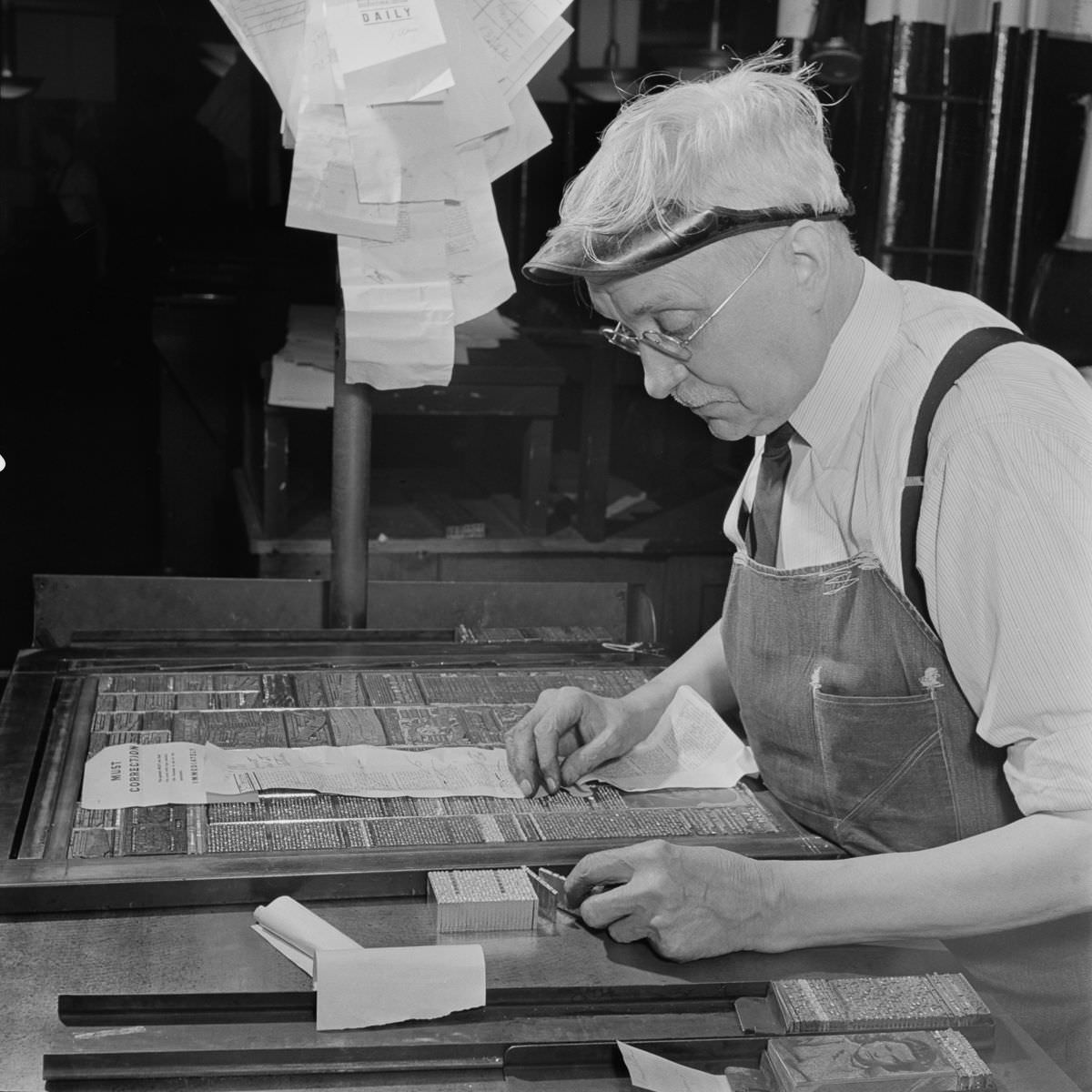
Bent over a stone-topped table, a compositor in visor and apron works with the quiet intensity that defined the composing room. In front of him lies a locked-up page form—lines of metal type arranged in tight columns—while slips of copy and proofs spill across the workspace, some clipped above like a paper waterfall waiting its turn.
The title, “Making up a page in the composing room,” points to the moment when scattered words become a finished newspaper or book page. Every small adjustment matters: spacing, alignment, and the careful placement of type and rules, checked against printed proofs before the form is ready for the press. The scene also hints at the ingenious everyday “inventions” of printing—tools, techniques, and habits that made mass communication possible long before digital layout.
Look closely and you can almost feel the rhythm of the shop: the weight of the chase, the precise hand movements, and the concentration required to keep errors from multiplying. For readers interested in printing history, letterpress craftsmanship, and how pages were built by hand, this photograph offers a vivid window into the skilled labor behind the printed word—and the human patience that held it all together.